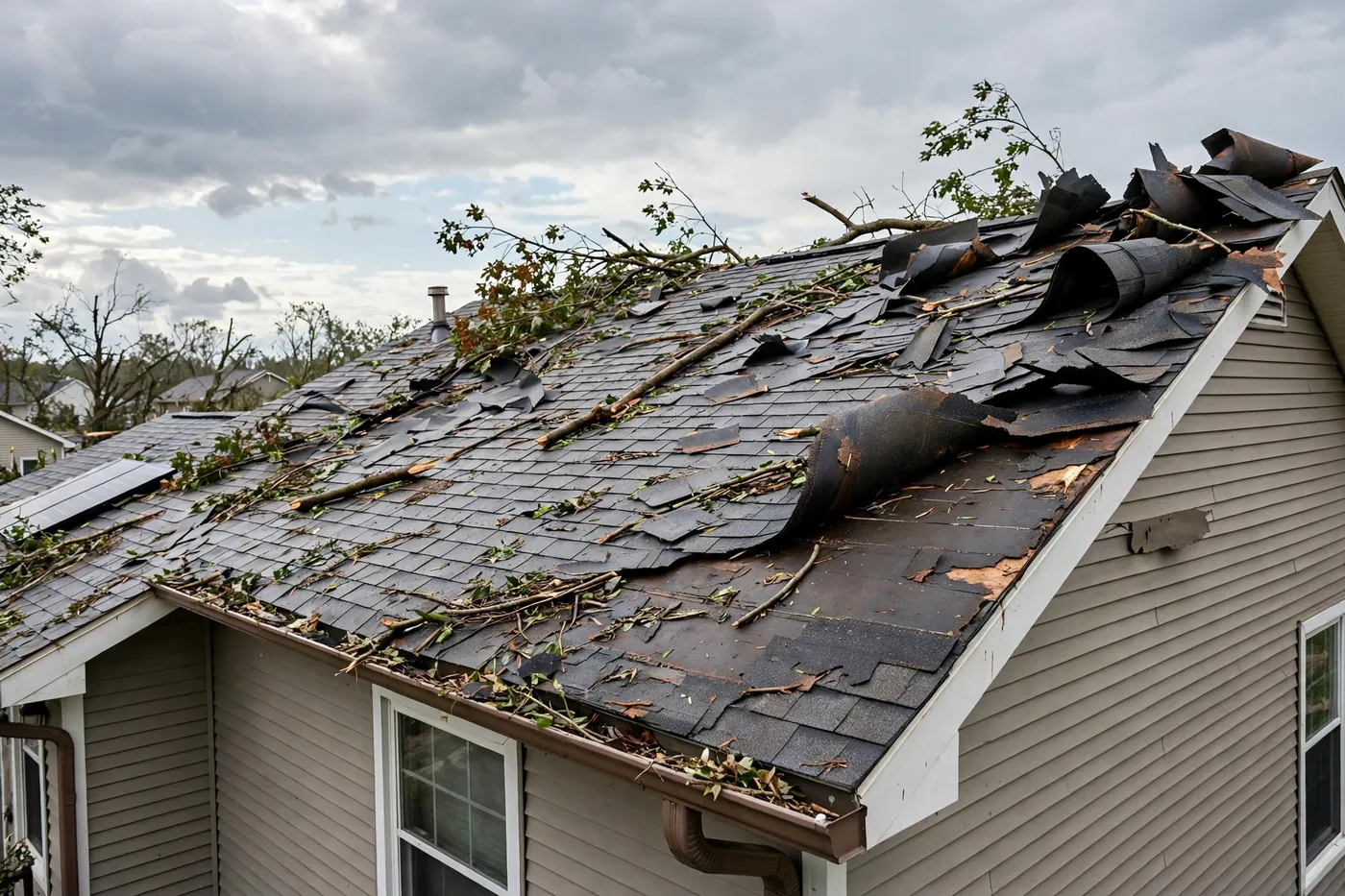
Storm damage roof leak repair in Owensboro begins with a careful look, not a quick patch. A storm that tears shingles off is obvious. The more common Owensboro storm is quieter: wind that lifts tabs and breaks seal strips, hail that bruises shingles, rain driven sideways under flashing. The roof looks intact from the driveway, and the first sign of trouble is a stain that appears days later, or a drip that only shows up in the next heavy rain.
Daviess County sits in the Green River region, where December and January storms bring strong wind and heavy rain in the same system. The F3 tornado of January 3, 2000 is the historic reminder of what wind can do here, but most storm leaks come from ordinary severe weather, repeated season after season. This page covers how storm damage is documented, how hidden damage is found, and how a repair scope is built so an insurance claim and the repair itself work from the same facts.
How wind and hail mark a roof differently
Wind damage follows a pattern, and knowing the pattern helps a check find it. Wind lifts shingle tabs starting at edges — gables, eaves, and ridges — where there is less weight holding the tab down and more lift from airflow over the roof. Once a seal strip breaks, the tab flutters, and each flutter works the nail and the seal a little looser. Hail damage follows a different pattern: random impact points across a slope, sometimes with cracked mats, sometimes with bruising that only shows when the shingle is flexed by hand.
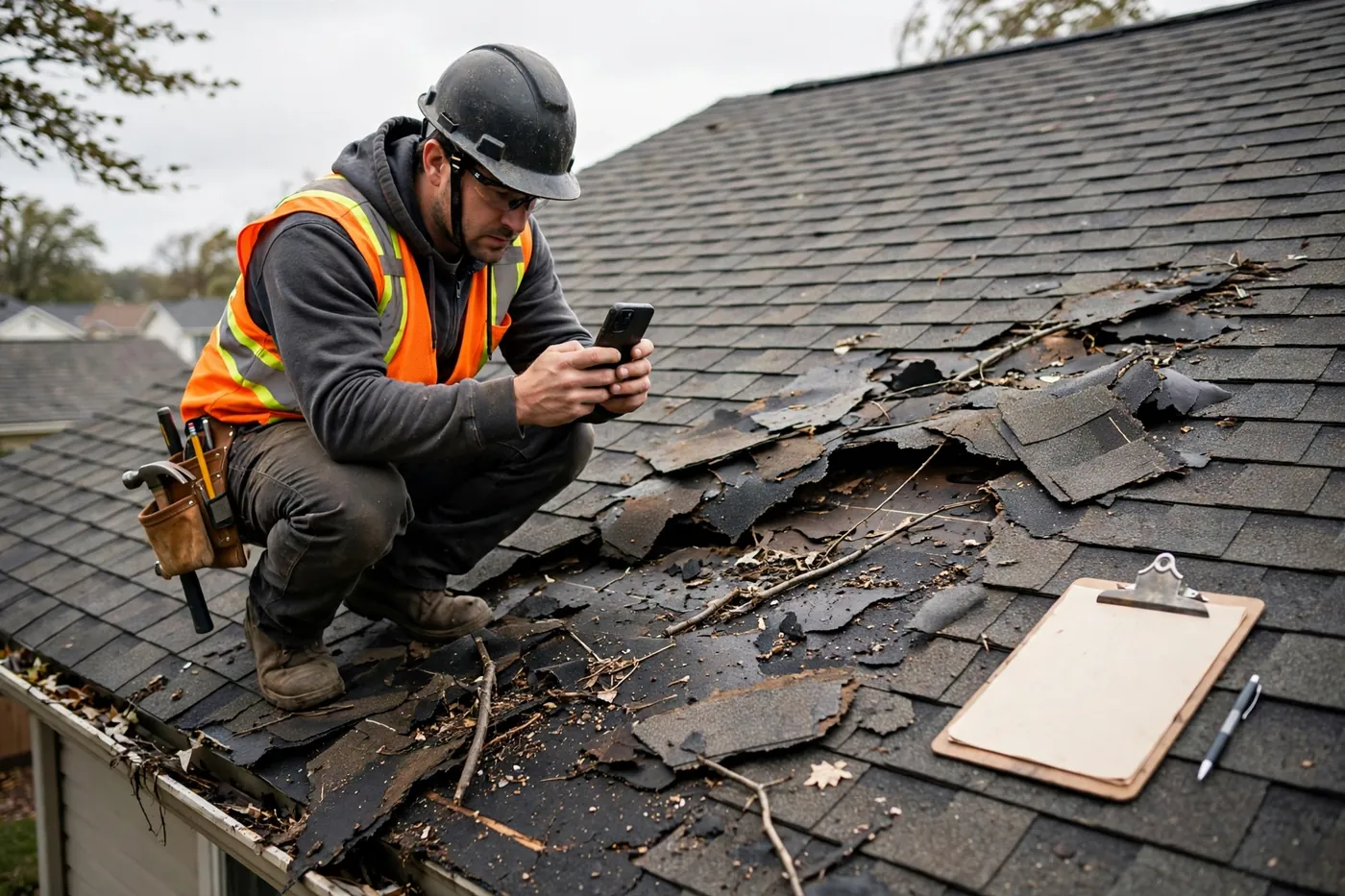
A slope-by-slope check after a storm looks for both patterns, and it looks at flashing and valleys too, because wind that lifts a tab can also work a piece of flashing loose at a chimney or wall. Photographs of each damaged area, taken before any repair, become the record for the repair scope and for the insurer. Without them, the conversation about what the storm actually did becomes a matter of memory, and memory fades fast once the roof is repaired.
Document first, repair second
Documentation is the least glamorous part of storm repair, and the most useful. Before cleanup, photograph the roof from the ground, then photograph each damaged area up close: lifted tabs, cracked shingles, damaged flashing, and any debris that shows wind direction. Inside, photograph stains, drips, and wet insulation in the attic, with a note of the date and what the weather was doing when the leak appeared.
Keep that material together with the repair scope. When an insurer asks what happened, a dated set of photos and a written scope that names each damaged slope and junction answers the question directly. It also stops a repair from drifting: the scope is the list of what the storm damaged, and anything added later should be explained as new damage or as a separate issue, not quietly folded into the storm job.
- Ground photos of the whole roof, then close photos of each damaged area
- Attic photos of stains, wet insulation, and the wet path
- A dated note of the storm, the wind, and when the leak first appeared
- One file holding photos, scope, and insurer notes together
Kentucky insurance claim steps, in order
A Kentucky insurance claim for roof storm damage usually follows a clear sequence. First, document the damage and take reasonable steps to stop further water entry, such as temporary cover over a damaged slope. Then contact the insurer and report the damage, describing the storm and what you have found. The insurer will usually arrange an adjuster visit, and permanent repairs are best made after that visit, so the adjuster sees the damage as the storm left it.
A written repair scope with photos helps at every step of that sequence. It gives the adjuster a clear list of damaged slopes, junctions, and materials, and it gives you a reference to compare against the insurer's assessment. If the two differ, the photos and the scope are what let you ask specific questions — about a slope, a valley, or a flashing junction — instead of arguing in general terms. Keep receipts for any temporary protection work, since those costs are part of the claim record.
Hidden damage, and why roof type changes the check
The hardest storm damage to find is the damage that has not leaked yet. A tab whose seal strip broke in a January storm may not leak until a spring storm drives rain sideways under it. A bruised shingle may hold for months before its mat cracks through. An attic check after a storm looks for the early signs: daylight through a lifted course, damp decking under a ridge, a nail line that has worked loose. Finding those now means a repair can be made on your timetable, not in the middle of the next storm.
This is also where the difference between roof types matters. A shingle roof shows wind damage as lifted tabs and broken seals. A metal roof shows it as loosened fasteners, lifted seams, or bent edge metal. A flat or low-slope section shows it as a lifted membrane edge or a damaged drain. Each type needs its own check, and a storm visit that only looks for missing shingles will miss the metal and flat-roof damage entirely.
Temporary cover, then a scope that separates storm from wear
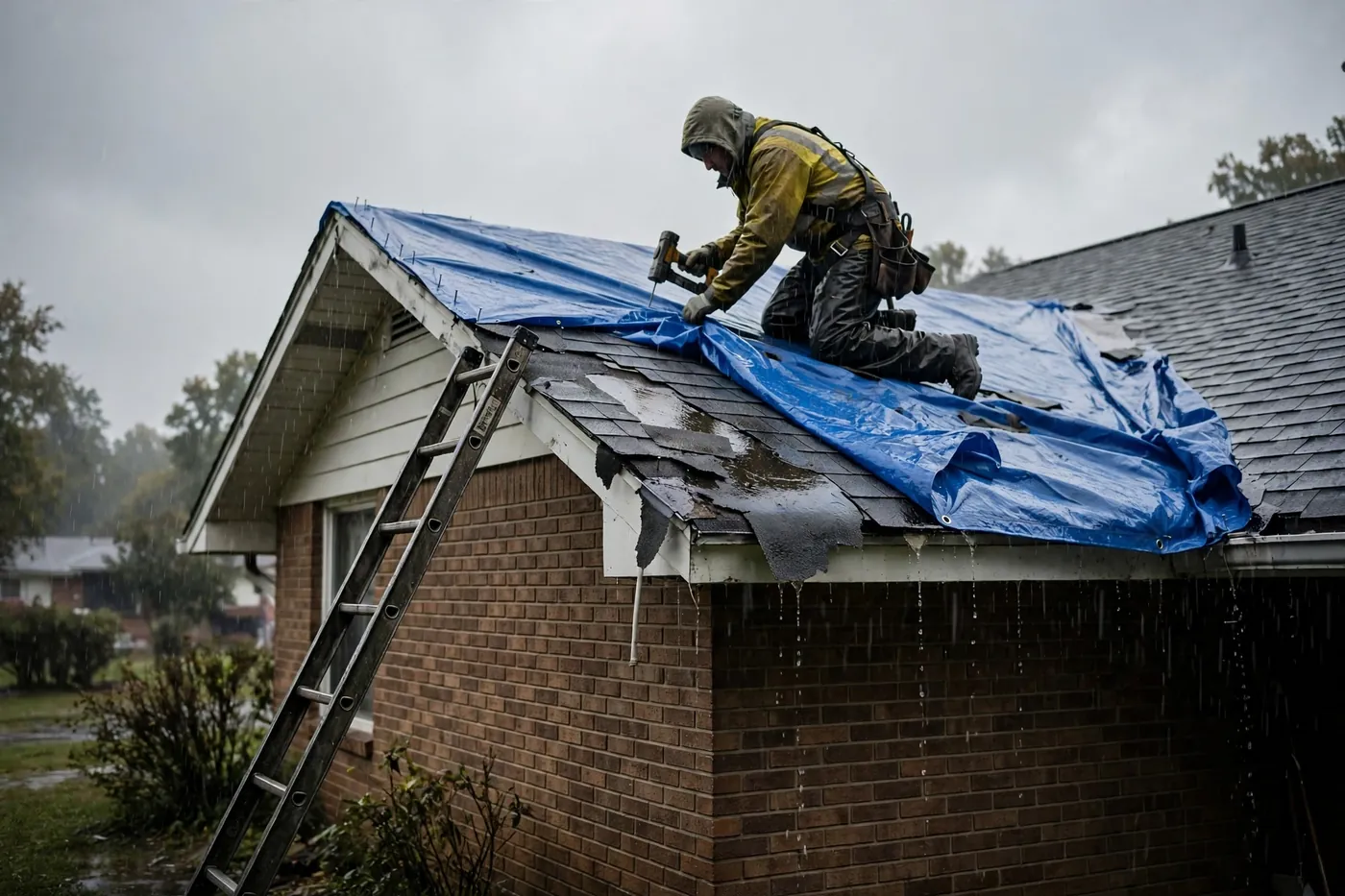
Temporary cover after a storm is about stopping further water, not finishing the job. A secured tarp over a damaged slope keeps rain out while the claim and the permanent repair are arranged, but it has to be fastened so wind does not turn it into a sail, and it should not trap water against the roof surface. Inside, the same rules as any leak apply: catch drips, protect belongings, and photograph anything wet before it dries.
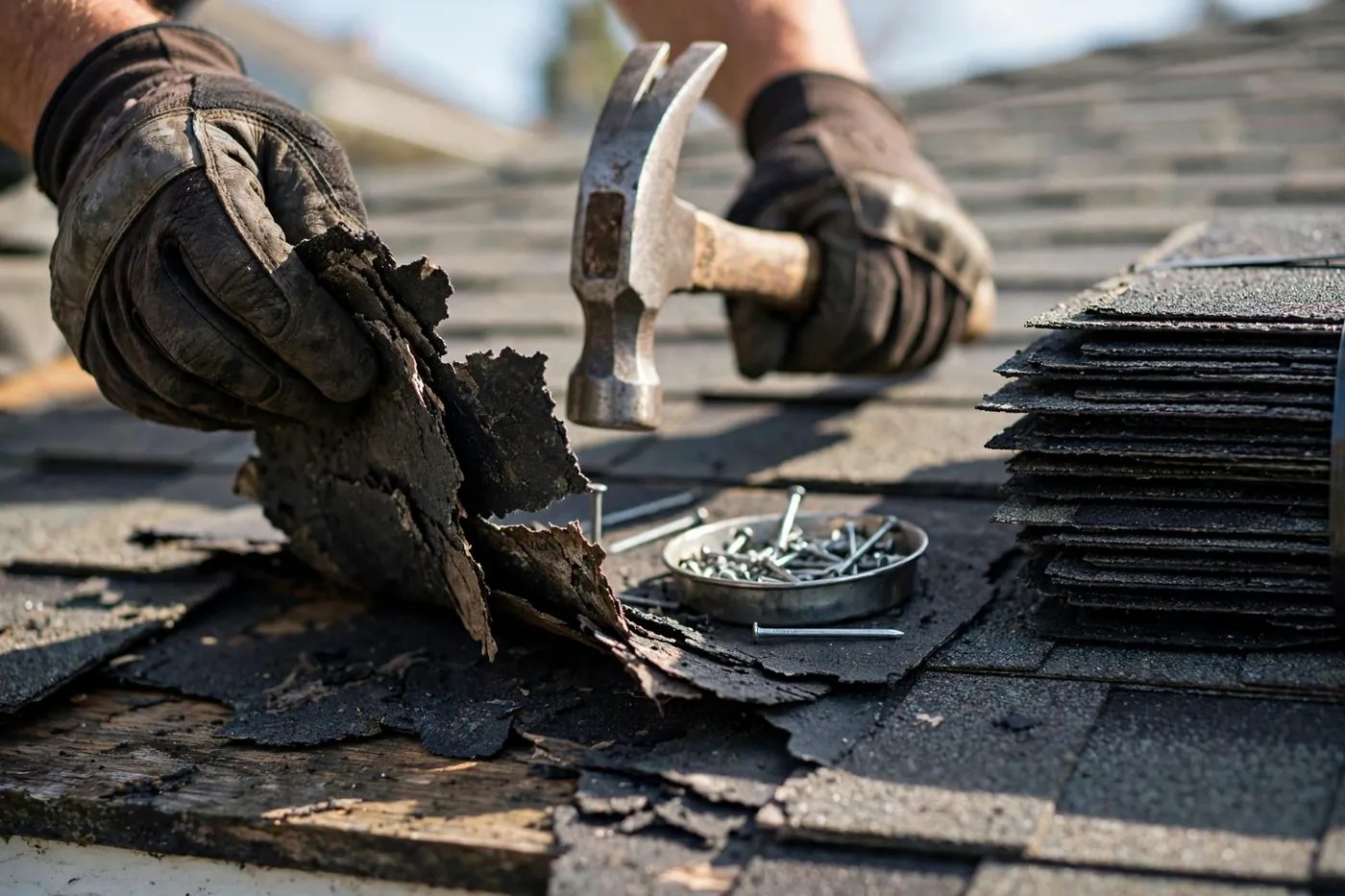
The permanent scope should separate storm damage from pre-existing wear, because an insurer will ask. A shingle that was already curled before the storm is a different matter from a tab the storm lifted, and a valley that was already rusted is different from flashing the storm worked loose. An honest scope names both, so the storm portion of the work is clear and the older wear is not hidden inside it. Cost factors follow the same split: damaged area, number of slopes, decking, flashing, and access all shape the final scope.