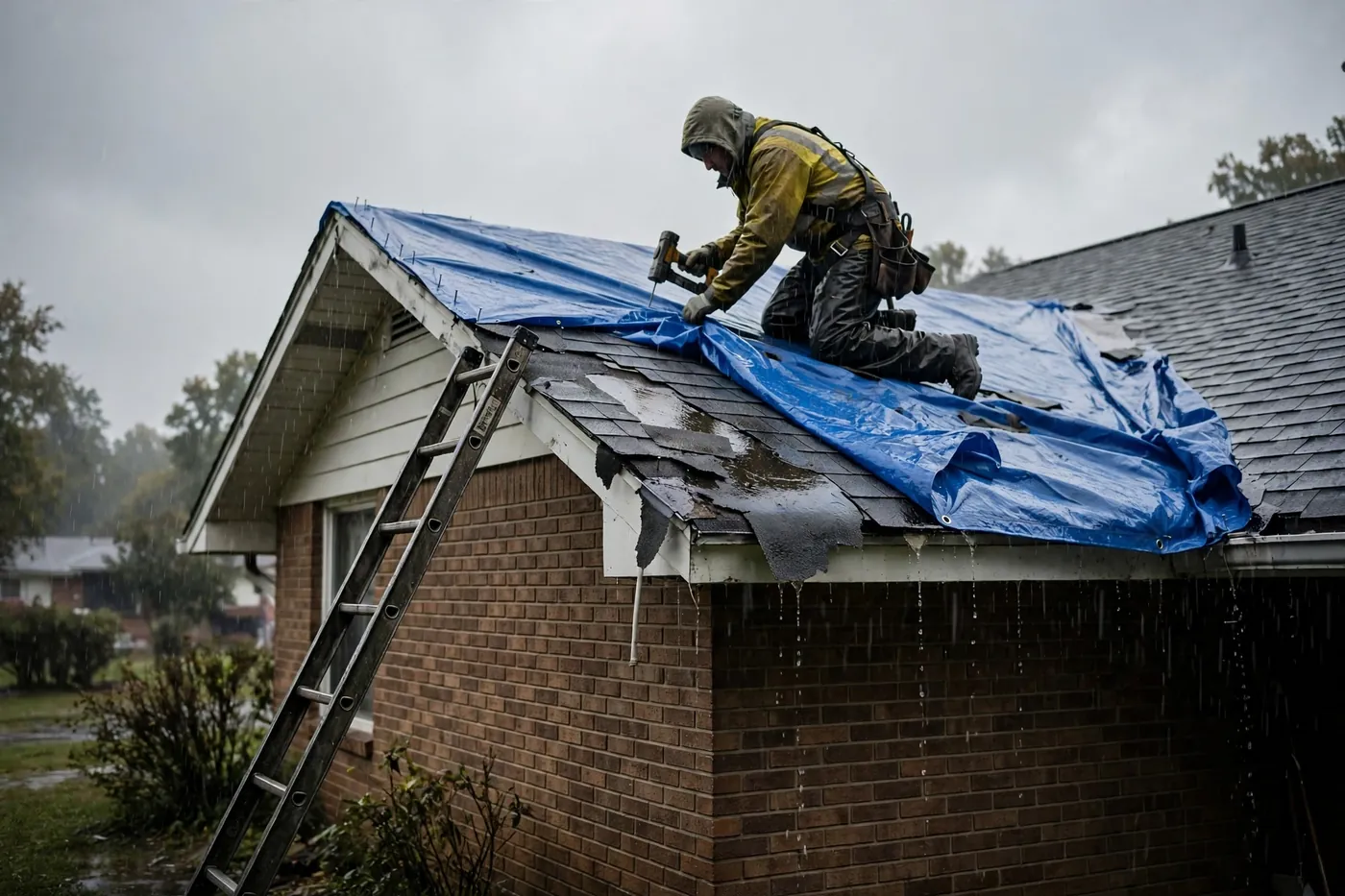
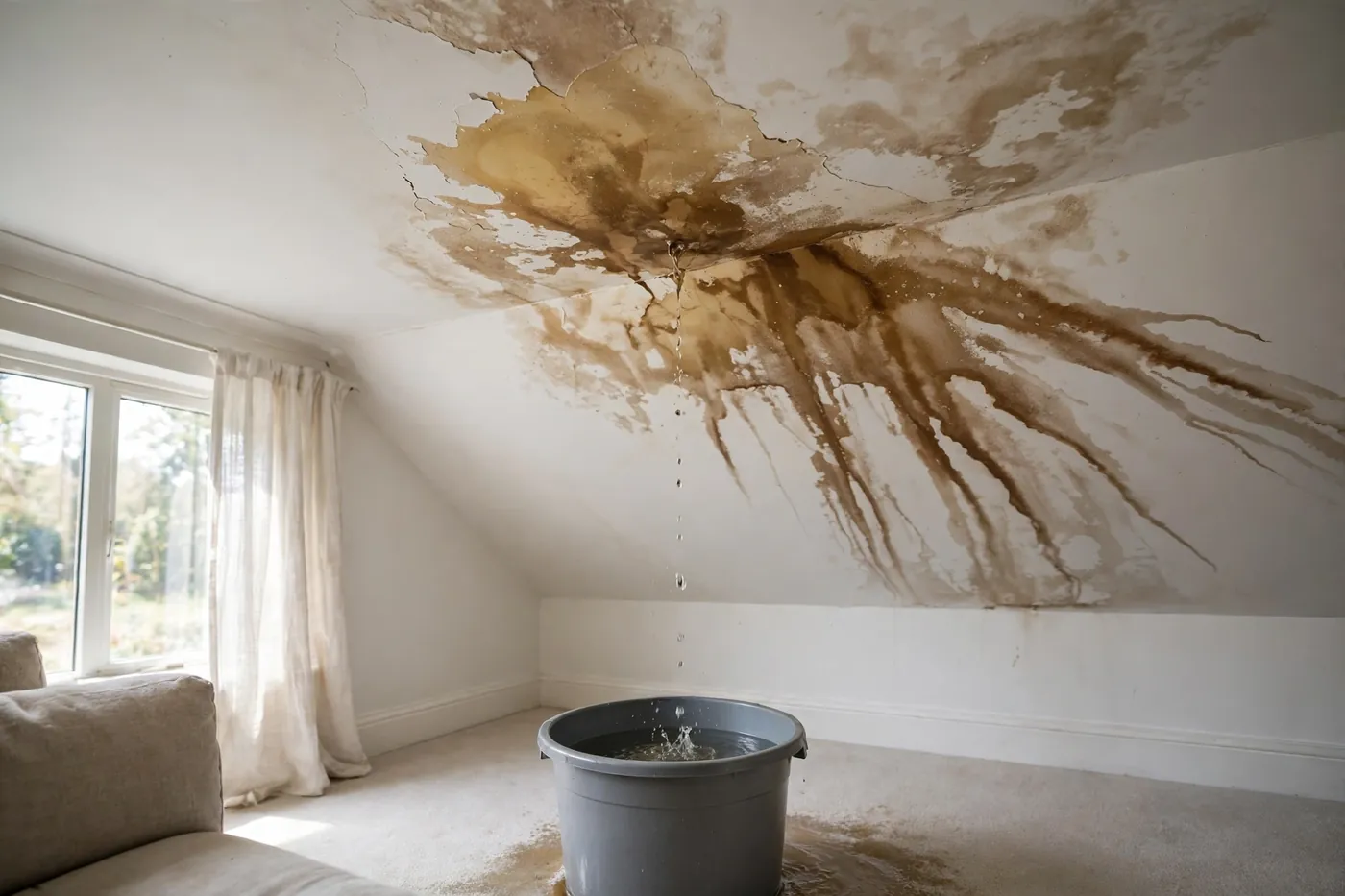
Roof leak detection in Owensboro is detective work before it is repair work. Patching the spot above a stain feels decisive, but it often seals the wrong place. Water enters at one point, travels along the decking or a rafter, and appears somewhere else entirely. Until that path is traced, every repair is a guess, and guesses tend to leak again at the next heavy rain.
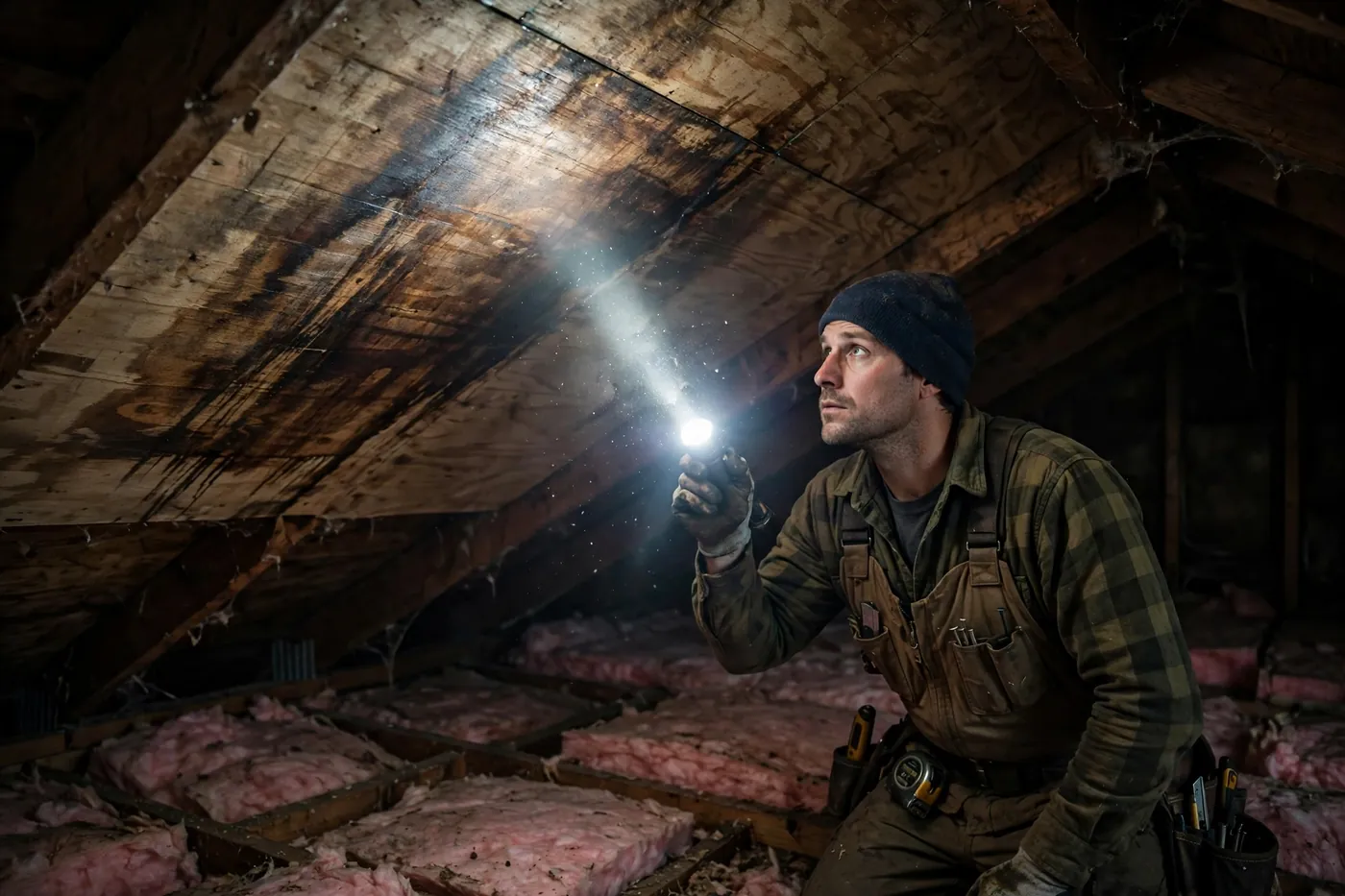
A proper detection visit works from the inside out. It starts with what the attic shows, adds meter readings that put numbers to dampness instead of relying on touch alone, and then tests the roof in controlled stages. The result is an entry point you can point to, with photos to back it up, rather than a best guess over a stain.
The stain is the last stop, not the starting point
Think of the underside of a roof as a set of channels. Rafters, decking seams, and the gaps around nails and penetrations all give water a route. A leak at a valley or a chimney can run downhill along a rafter and drop through the ceiling in a different room. Homeowners sometimes describe a leak that moves: a stain in one place after one storm, a drip somewhere else after the next. That movement is a clue, not a mystery. Wind direction changes which edge of a flashing or shingle lets water in, and the water then follows a slightly different path each time.
This is why a detection visit maps the whole wet area before touching the roof surface. Darkened decking, stained insulation, rust marks around nails, and damp dust patterns each mark part of the route. Together they draw a line uphill. The end of that line, not the stain, is where the repair belongs.
What meter readings add to a visual check
A moisture meter gives a reading that eyes and hands cannot. Decking that looks dry on the surface can still hold moisture underneath, and insulation that feels only slightly damp may be soaked through. Readings taken across the slope show a pattern: higher readings near the entry point, lower readings as you move away from it. That pattern is far more useful than a single wet spot.
Readings also matter after a repair. Comparing readings before and after work shows whether the area is actually drying, which matters in Owensboro because Ohio River humidity slows drying in enclosed attics. A section that stays wet after a repair either has a second entry point or a ventilation problem keeping moisture in place. Either way, the meter flags it before the ceiling is closed up and painted over.
- Readings across the slope reveal a wetness pattern pointing toward the entry
- Hidden dampness under dry-looking decking or inside insulation gets caught
- Repeat readings after repair show whether the area is genuinely drying
- High humidity in the Ohio River region makes that follow-up check worth doing
Staged water testing, one section at a time
Staged water testing is the most reliable way to confirm a suspected entry point. One person applies water to a small section of roof, starting low and working upward, while another watches inside the attic for the first sign of a drip. Each section is tested on its own. When water appears, the entry point is in the section that was just wetted, not somewhere higher up the slope.
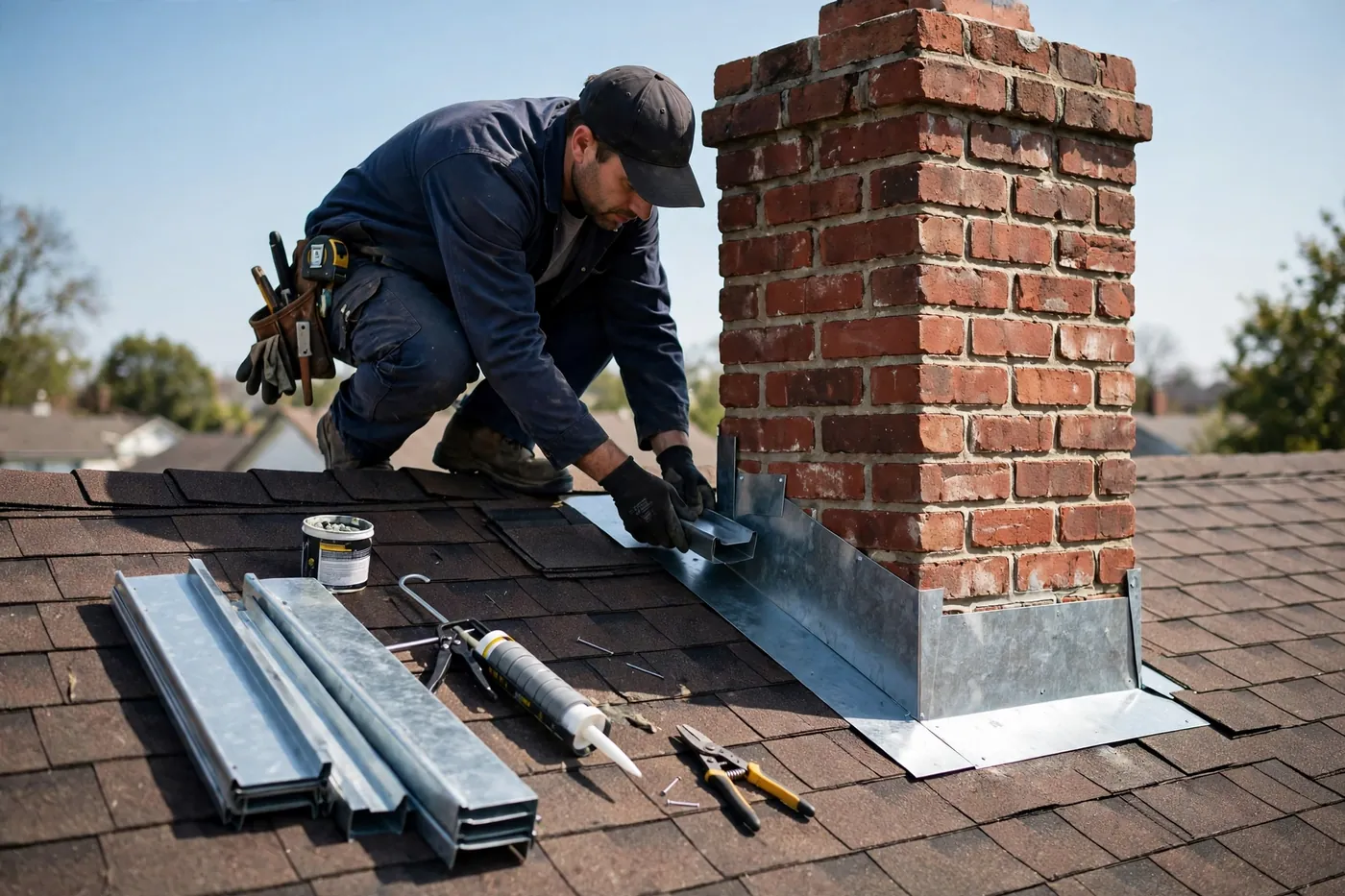
The order matters. Testing from the top down would let water run over every junction below it, so a drip could come from anywhere along the way. Testing from the bottom up removes that doubt section by section. It takes patience, and it works best in dry weather when a new drip is easy to spot against dry decking. Flashing at chimneys and walls, skylight curbs, and valley sections each get tested separately, because each can fail in its own way.
Daylight, pinholes, and the lookalikes
Not every test needs water. On a bright day, a dark attic can reveal pinholes of daylight through gaps in decking, around nails, or at a cracked flashing joint. Those pinholes mark openings, though not every opening leaks — some sit under a shingle overlap that still sheds water. The check is a starting point, not a verdict, and it works best alongside meter readings and staged testing.
Daylight checks also catch the lookalikes. Skylight flashing that has pulled away, step flashing that has lost its seal at a wall, and counterflashing on a brick chimney are all common Owensboro entry points, and each shows up differently in the attic. So does gutter overflow: a clogged gutter or a downspout that cannot handle a heavy downpour can push water behind fascia boards and into a soffit, leaving a stain that looks exactly like a roof leak. Ruling those out before cutting into shingles saves a needless repair.
- Pinholes of daylight mark gaps, but each one still needs a water test to confirm
- Skylight, chimney, and wall flashing each fail in a different, recognisable way
- Gutter overflow behind fascia can mimic a roof leak from inside the house
- Ruling out lookalikes first avoids repairing a roof that was never the problem
Leak or condensation: the Owensboro winter question
Owensboro winters create a second kind of attic stain that has nothing to do with a hole in the roof. Warm, moist air from the house rises into a cold attic, condenses on the underside of the decking, and drips back down onto insulation and ceiling drywall. The stain it leaves can look identical to a leak stain, and the drip may even appear during dry, cold weather, which is the giveaway: a roof leak needs rain, condensation does not.
Telling the two apart changes the fix completely. A condensation problem points to ventilation, air sealing, or insulation gaps rather than new shingles or flashing. Detection work checks for that pattern — widespread light dampness and frost or staining across a broad area, rather than a single wet path leading to one junction. Getting this distinction right matters, because sealing a roof that was never leaking leaves the real moisture problem running all winter.