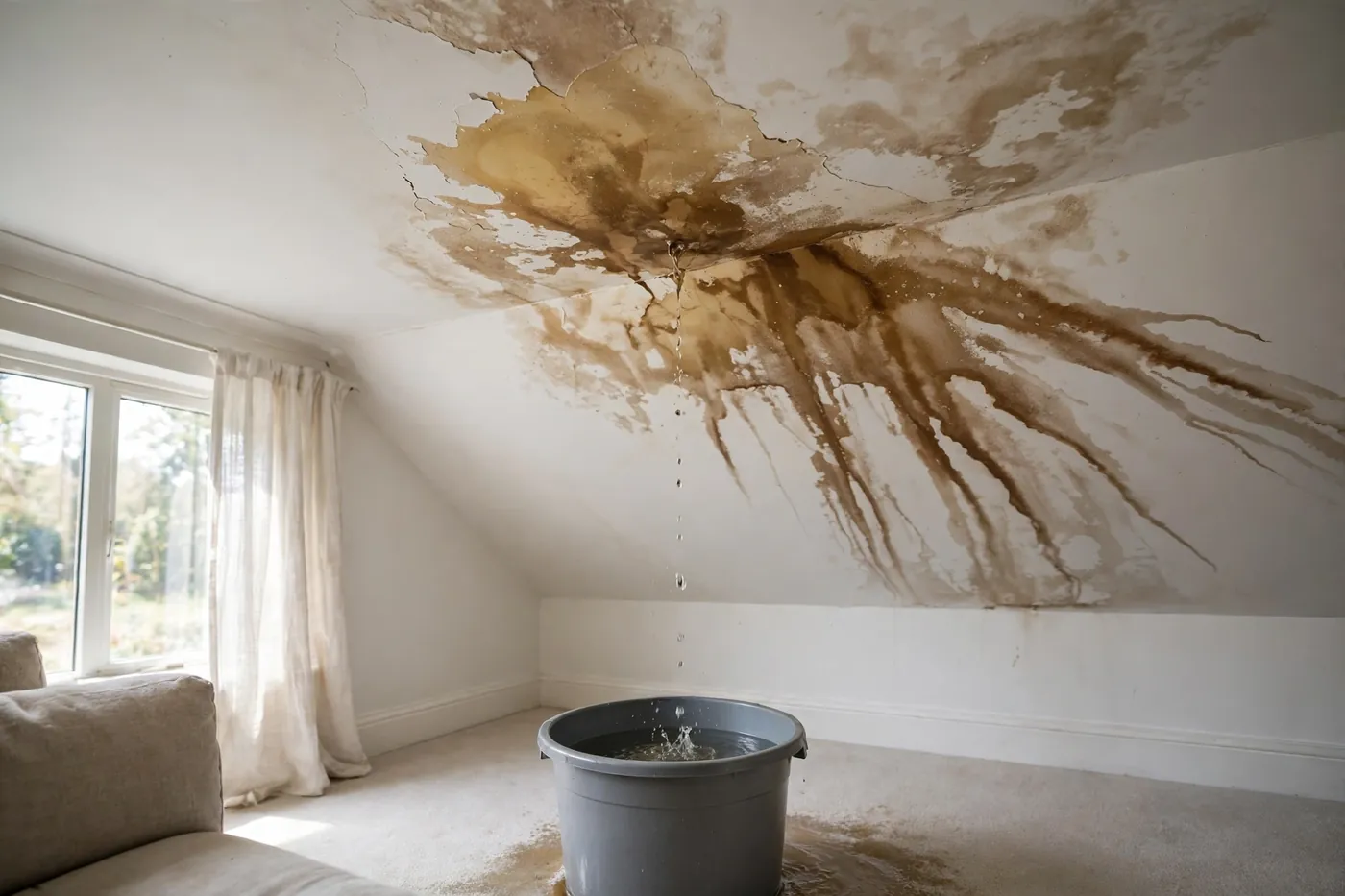
It is the question almost every homeowner asks after finding a stain on the ceiling: will insurance cover this? The honest answer is that it depends, and the deciding factor is rarely the size of the stain. Insurers look at what caused the water to get in, whether the cause was sudden, and whether the roof was being maintained before the leak appeared.
This guide explains how that thinking usually works in Kentucky, what kinds of roof leaks tend to be covered, what kinds tend not to be, and what to document from the start so a claim, if you file one, is built on clear evidence rather than memory.
Sudden damage is treated differently from slow wear
Most standard homeowners policies in Kentucky cover sudden, accidental damage — a tree limb through the roof during a storm, shingles torn off by high wind, hail that breaks through the surface. In those cases, the leak is a consequence of an event, and the resulting water damage inside the house is often part of the same claim.
That distinction matters. The policy is usually covering the storm event and what it caused, not the roof itself as a worn-out surface. A roof that was already at the end of its life, or a flashing joint that had been failing slowly for years, is treated differently from a roof that was damaged in a single night. Knowing which side your leak falls on helps set expectations before you call anyone.
- Storm, wind, and hail damage: often covered as a sudden event
- A leak that developed slowly over months: often not covered
- Damage inside the house caused by a covered event: often included
Why slow leaks are the hardest claims
Wear, age, and lack of maintenance are the most common reasons a leak claim is denied. Shingles wear out. Sealant dries and cracks. Flashing rusts. Those are gradual processes, and insurers generally treat them as the homeowner's maintenance responsibility rather than an insurable event.
This is where Owensboro weather quietly works against homeowners. Ohio River humidity keeps a small leak damp, and a slow leak can do real damage before it ever shows on a ceiling. By the time it is visible inside, an insurer may see a long-running maintenance issue rather than a sudden failure — even if the homeowner only just noticed it. That is why catching leaks early, and keeping a record of inspections and repairs, matters for more than the roof itself.
Document first, then stop the damage from spreading
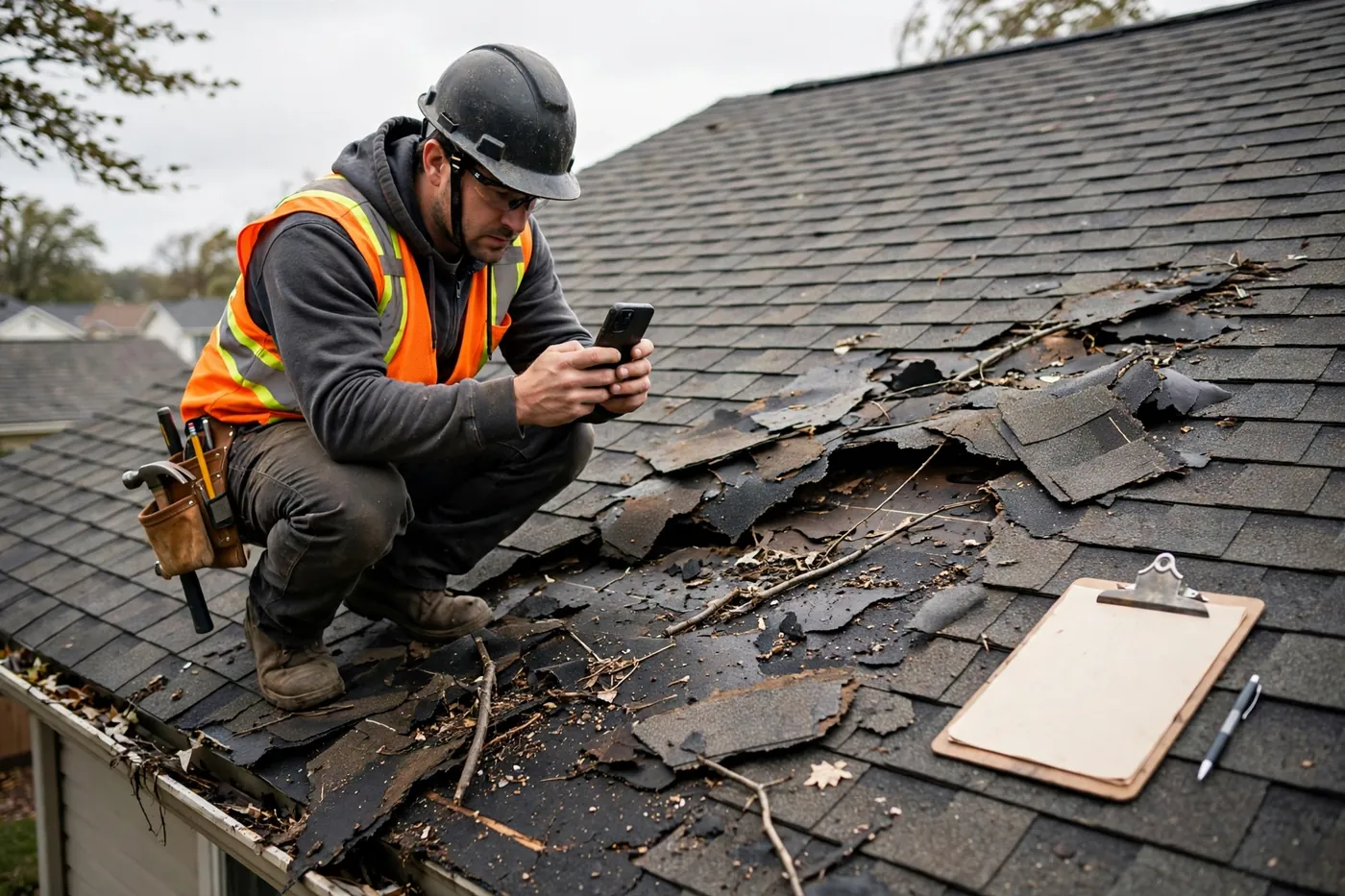
If you think the leak may be claimable, document before you repair. Take photos of the stain, the drip, and anything visible in the attic. Note the date and the weather — a storm on a specific night, high wind, hail — and keep any weather reports or neighbour accounts that confirm it. If a tree limb or debris caused the damage, photograph that too before it is cleared away.
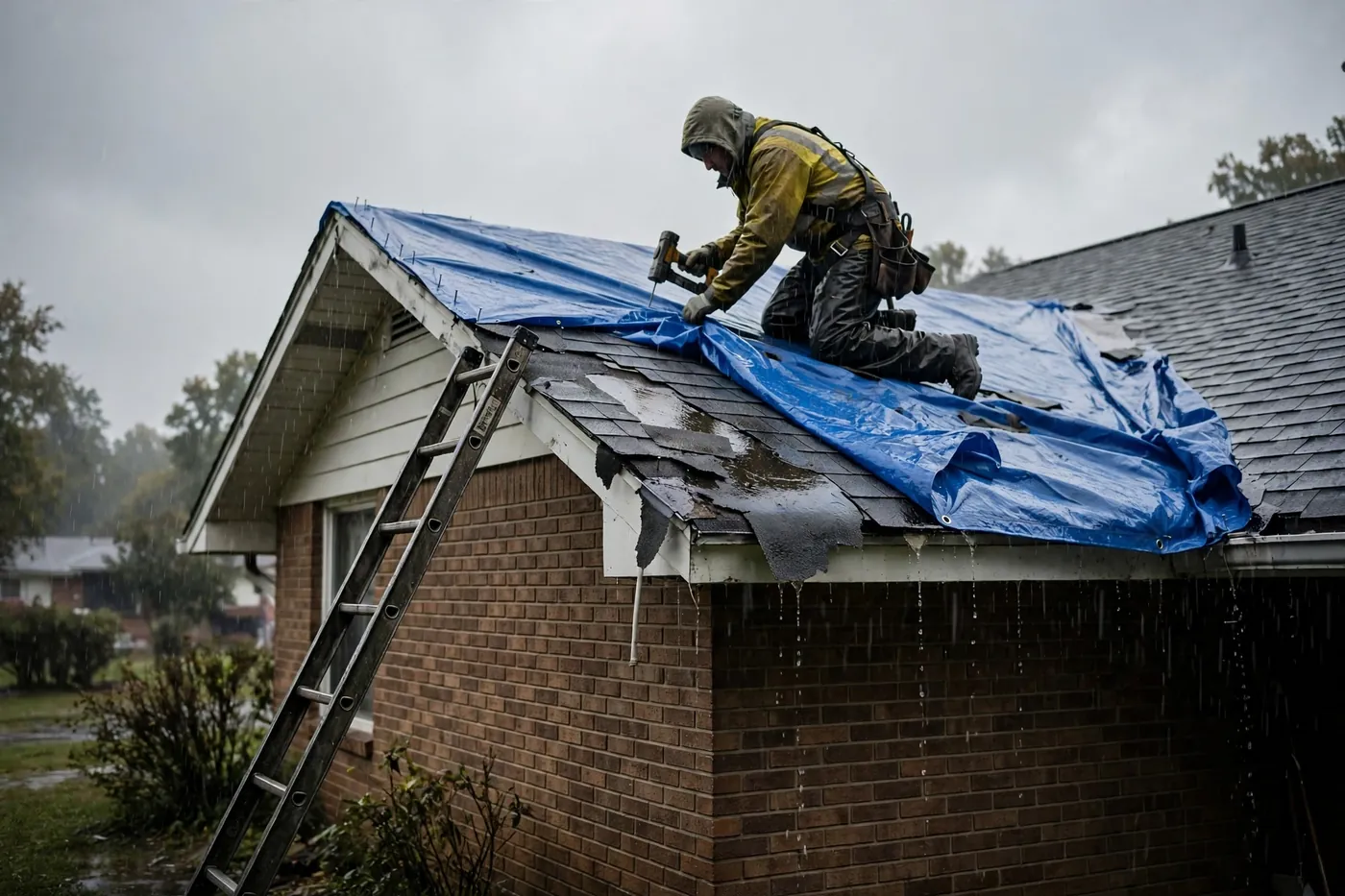
Do not wait for an adjuster before stopping further damage, though. Policies usually require homeowners to take reasonable steps to prevent more harm — buckets under a drip, moving belongings, covering a hole once it is safe to do so. Keep receipts for anything you buy to contain the leak, and keep photos of the damage as it was before any repair work started.
What an adjuster will look at
An adjuster will want to see the roof, the attic, and the damage inside. An attic-first inspection report, with photos showing the entry point and the path the water took, gives the adjuster something concrete to work with. It also helps you understand, before the adjuster arrives, whether the cause looks sudden or gradual.
Be ready for questions about the roof's age, past repairs, and past leaks. Answer plainly and stick to what you know. If you have records of past inspections or repairs, have them ready. If you do not, say so — guessing at dates or past work helps no one, and an adjuster will usually find the real history anyway.
If the claim is denied, or only partly covered
Even when a claim is denied, the leak still needs fixing, and the denial does not change the repair itself. A targeted repair at the source — a failed flashing joint, a cracked vent boot, a section of damaged shingles — is the same job whether insurance pays for it or not. What changes is who pays, and how quickly you decide to go ahead.
If a claim is approved in part, read the breakdown carefully. Some policies cover the interior water damage but not the roof repair itself, or cover the repair but not the full replacement of a worn section. Ask for the reasoning in writing if anything is unclear, and get a written scope for the repair work so you can compare it directly against what the policy covers.
Keep a roof file for next time
A few habits make future claims much stronger. Keep a simple file for your roof: inspection photos, repair scopes, dates of work done, and notes about storms that caused damage. Check the attic a couple of times a year, especially after heavy rain and after winter, and note anything that looks damp or stained.
None of this requires climbing onto the roof. A ground-level look at shingles and flashing, plus a safe attic check, catches most early signs. The file you build over time is also useful for a future buyer, and for any contractor who needs to understand the roof's history without starting from scratch.
- Inspection photos and written repair scopes, with dates
- Notes about storms and any damage they caused
- A record of past leaks, even small ones that were repaired