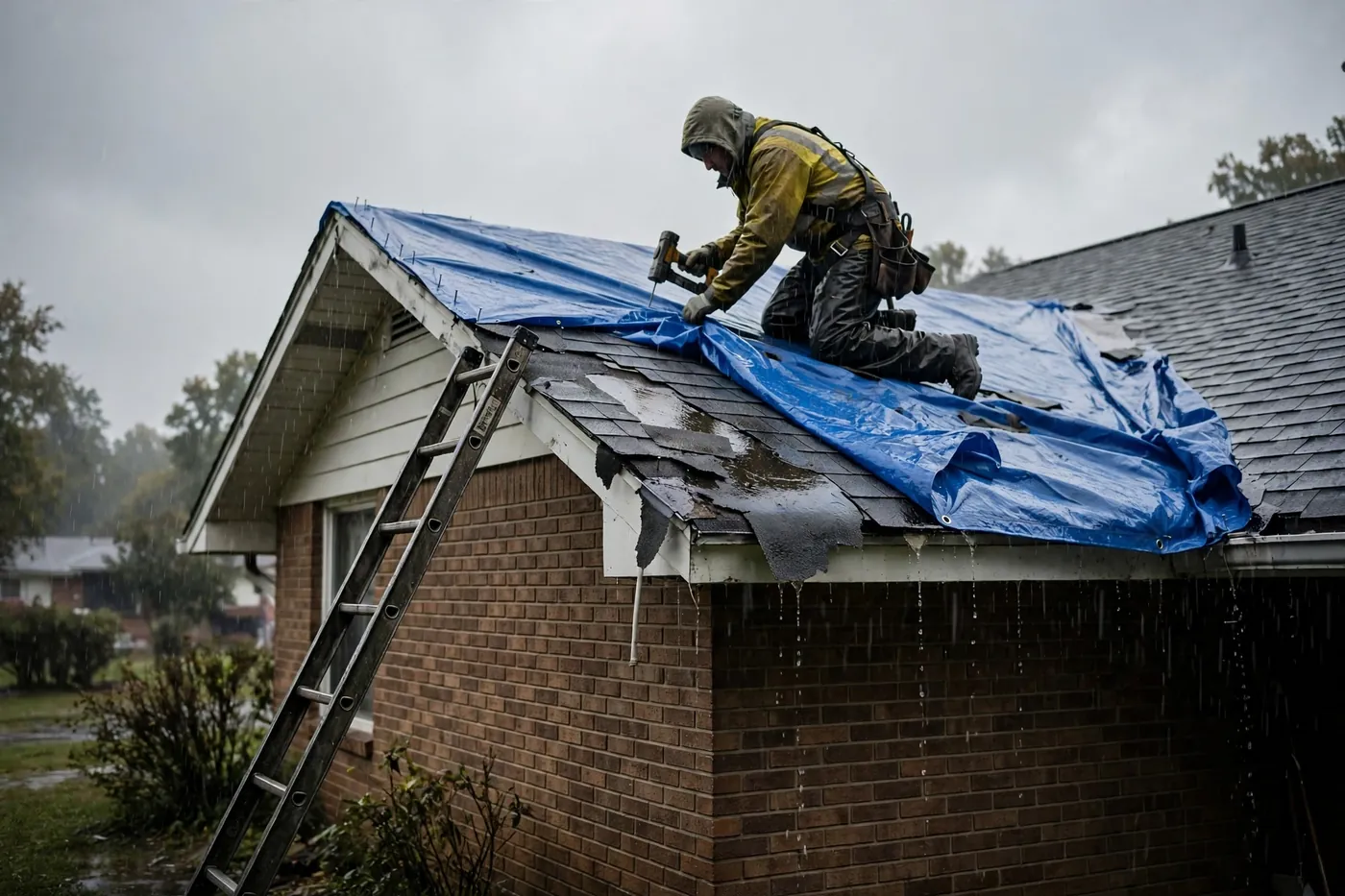
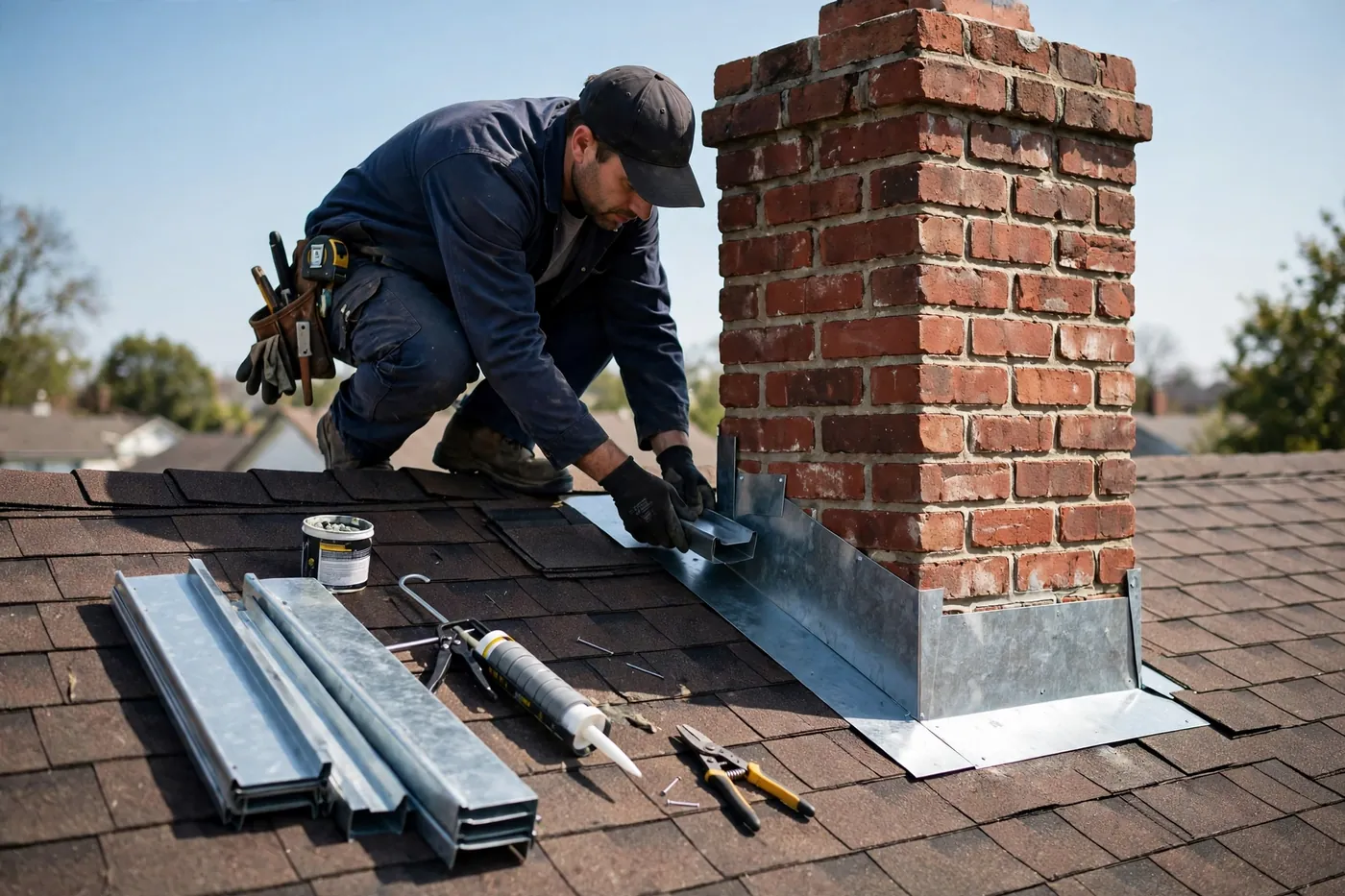
Roof leak repair in Audubon-Bon Harbor, Owensboro has a river-side character to it. Homes in this part of town sit closer to the Ohio River, where wind has a longer, more open run and humid air lingers. That combination pushes rain sideways into roof joints and keeps shaded slopes damp longer after a storm, so leaks here often begin at edges, ridges, and flashing that look perfectly sound from the driveway.
The housing in the area mixes older homes with later additions and remodels, which means a single roof can carry flashing from more than one era. Where an addition meets the original house, two roof systems meet too, and that seam is a classic leak point. If water is showing up inside, call now and mention the weather that brought it on. A leak that follows wind-driven rain tells a different story from one that appears after any rain at all.
River Wind and the Leaks It Finds
Wind exposure is the defining leak factor in Audubon-Bon Harbor. Open ground near the river lets gusts build before they hit a roof, and wind-driven rain does not fall politely onto shingles. It pushes under lifted edges, into ridge caps, and sideways along wall flashing, reaching openings that a vertical shower never touches. A roof that has never leaked in a calm rain can leak for the first time in a December or January storm, and the leak may vanish again until the next wind shift.
That pattern is useful evidence, not a mystery. If a stain appears only in certain storms, the opening is usually at a wind-facing joint: a ridge, a gable edge, a valley mouth, or the flashing where a roof meets a wall. Sealing the ceiling below the stain will not touch it, because the water is entering well away from where it drops.
- Open river-side ground gives gusts a longer run at roofs
- Wind-driven rain enters joints that calm rain misses
- Ridges, gable edges, and wall flashing take the worst of it
- Storm-only leaks point to a wind-facing opening
Why the Stain Sits Away From the Opening
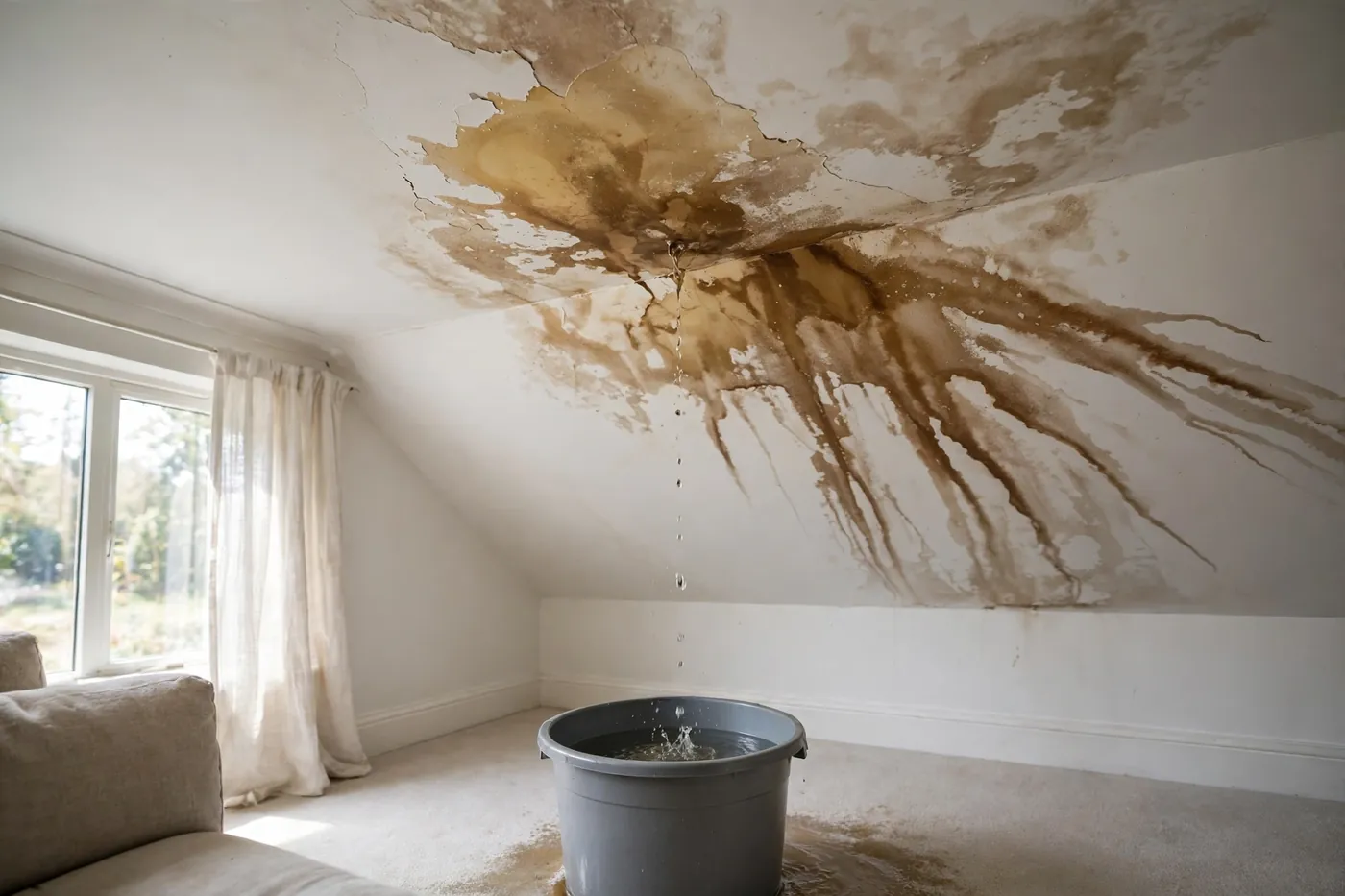
Once water gets in, it rarely drops where it entered. It runs along the underside of the decking, follows a rafter downhill, and only falls when it reaches a joint, a gap, or the end of a board. In Audubon-Bon Harbor homes with long roof runs and additions, that journey can carry a stain across a room or into a neighboring one, and a homeowner can easily end up chasing the wrong spot.
The attic tells the honest version of the story. Damp insulation, stained decking, and a dark line running uphill all lead back toward the opening, whether that opening sits at an addition seam, a chimney, or a valley. A repair aimed at the uphill end of that line holds; a repair aimed at the stain alone usually does not.
- Water follows decking and rafters downhill before it drops
- Addition seams send water across rooms before it shows
- Attic damp lines run uphill toward the true source
- Repairs belong at the opening, not at the stain
Humid Air, Cold Attics, and False Leaks
Humidity is the other river-side factor, and it matters most in winter. Owensboro's Ohio River air is damp, and warm air from the house that reaches a cold attic will condense on decking and drip onto insulation, leaving marks that mimic a roof leak. The tell is timing: condensation shows up on cold mornings without rain, often in the same places again and again, while a true leak tracks a storm and leaves a trail back to a joint.
Ventilation and air sealing at the ceiling line are what keep condensation in check, and they are worth sorting out before shingles are disturbed. Treating a condensation problem as a shingle failure wastes a repair and leaves the dampness in place, while treating a leak as condensation lets water keep working on the decking. A check that looks at both the roof and the attic avoids both mistakes.
- River humidity feeds winter attic condensation
- Condensation drips on cold mornings without rain
- Leaks track storms and lead back to a roof joint
- Ceiling air sealing and ventilation cut condensation risk
First Steps, and What Shapes the Repair
When a leak appears, move what you value out from under it, catch the drip, and photograph the stain with part of the surrounding ceiling in the frame. Note the storm, the wind direction if you noticed it, and whether the dampness has appeared before. If the attic is safe to enter, look for the damp line and see whether it heads toward an addition seam, a valley, or a vent. Stay off a wet roof. Call now with those details and the repair can begin at the source.
What a repair involves depends on what that check finds. The damaged area's size, whether decking or flashing must come out, the steepness and wind exposure of the slope, and whether structural work falls under Owensboro Metropolitan Planning Commission permit rules all shape the scope. Repairs that follow NRCA and ARMA guidance, with wind resistance standards such as ASTM D7158 considered where they apply, are matched to the roof and the exposure it faces, which matters more near the river than almost anywhere else in Daviess County.
- Protect belongings, catch the drip, and photograph the stain
- Note the storm and whether the leak is new or returning
- Scope depends on decking damage, exposure, and roof shape
- Permit rules and material standards shape the final job