Dogwood Azalea, Owensboro, KY
Roof Leak Repair in Dogwood Azalea, Owensboro
Mature landscaping and shaded slopes give Dogwood Azalea leaks a slow, damp character all their own.
24/7 Emergency ServiceResidential & CommercialOwensboro · Daviess County
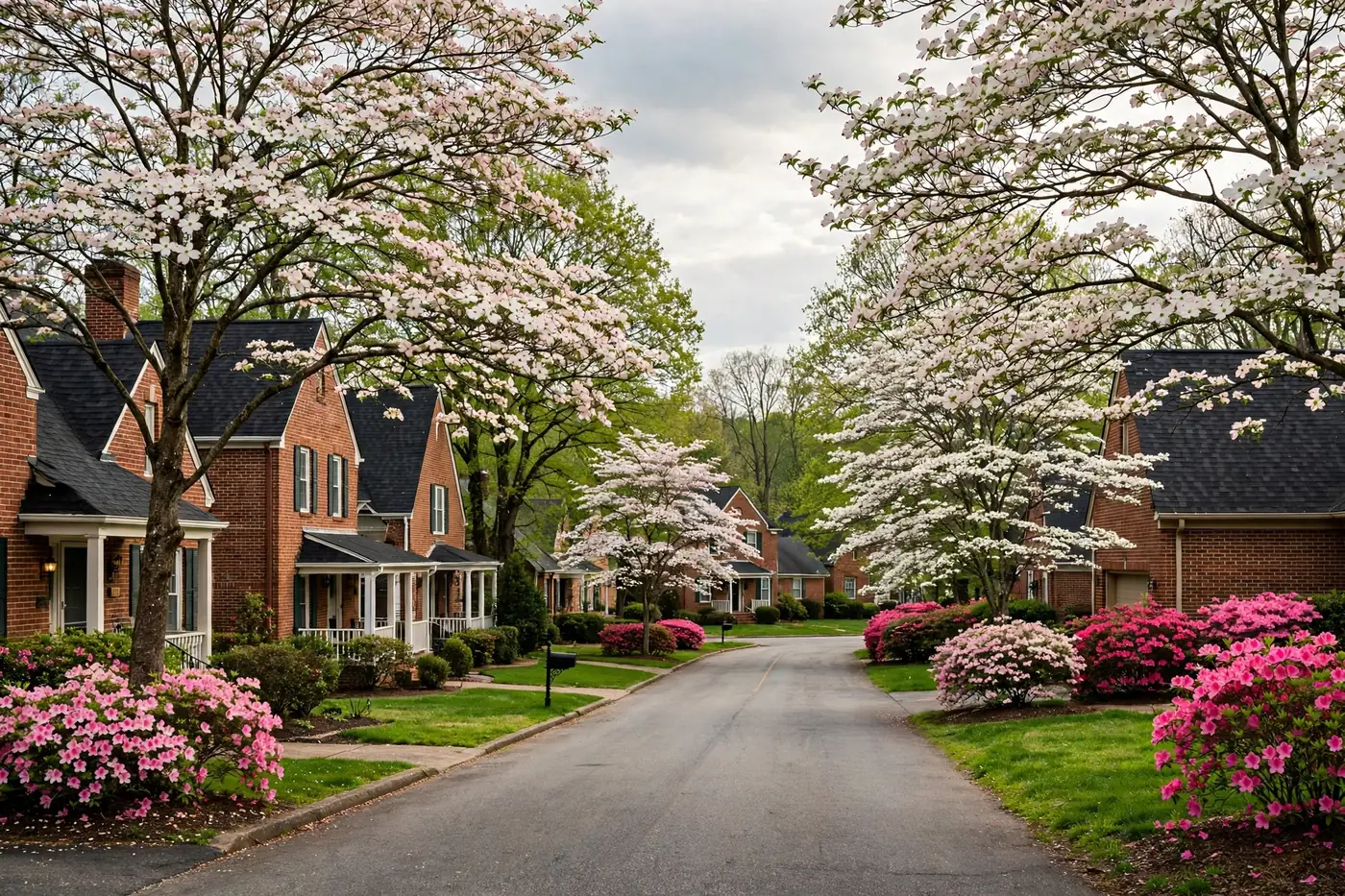
Mature landscaping and shaded slopes give Dogwood Azalea leaks a slow, damp character all their own.
Roof leak repair in Dogwood Azalea, Owensboro begins with the planting that gives the area its name. Dogwoods, azaleas, and other mature landscaping shade these streets and soften the look of the whole area, and they also keep roofs damp longer after every rain. A shaded slope dries slowly, debris breaks down into a mat that holds moisture in valleys, and algae takes hold on surfaces that never quite dry out. None of that leaks on its own, but all of it shortens the life of the flashing and shingles underneath.
The homes here are established subdivision homes with the kind of mature tree cover that makes a roof hard to see from the street. A leak can develop quietly under that canopy, showing up first as a faint ceiling stain or a musty smell in a back room. If you notice either, call now and note which rooms are affected and whether the dampness follows rain or cold mornings. That detail separates a roof leak from attic condensation before anyone climbs a ladder.
Shade is the quiet leak factor in Dogwood Azalea. A north-facing slope or a slope under heavy canopy can stay damp for days after a rain, and that lingering dampness does two things: it lets leaves and twigs in valleys break down into a mat that dams water, and it encourages the dark streaking that marks algae growth on shingles. The mat is the bigger problem, because it holds water against valley metal and shingle edges, pushing it sideways into joints during the next heavy rain.
Overhanging branches add wear of their own. Limbs that brush a roof in the wind scrape granules from shingles and lift edges just enough for wind-driven rain to get underneath. The damage is often confined to one slope, which is why a Dogwood Azalea leak can sit over a single bedroom while the rest of the roof looks untouched.
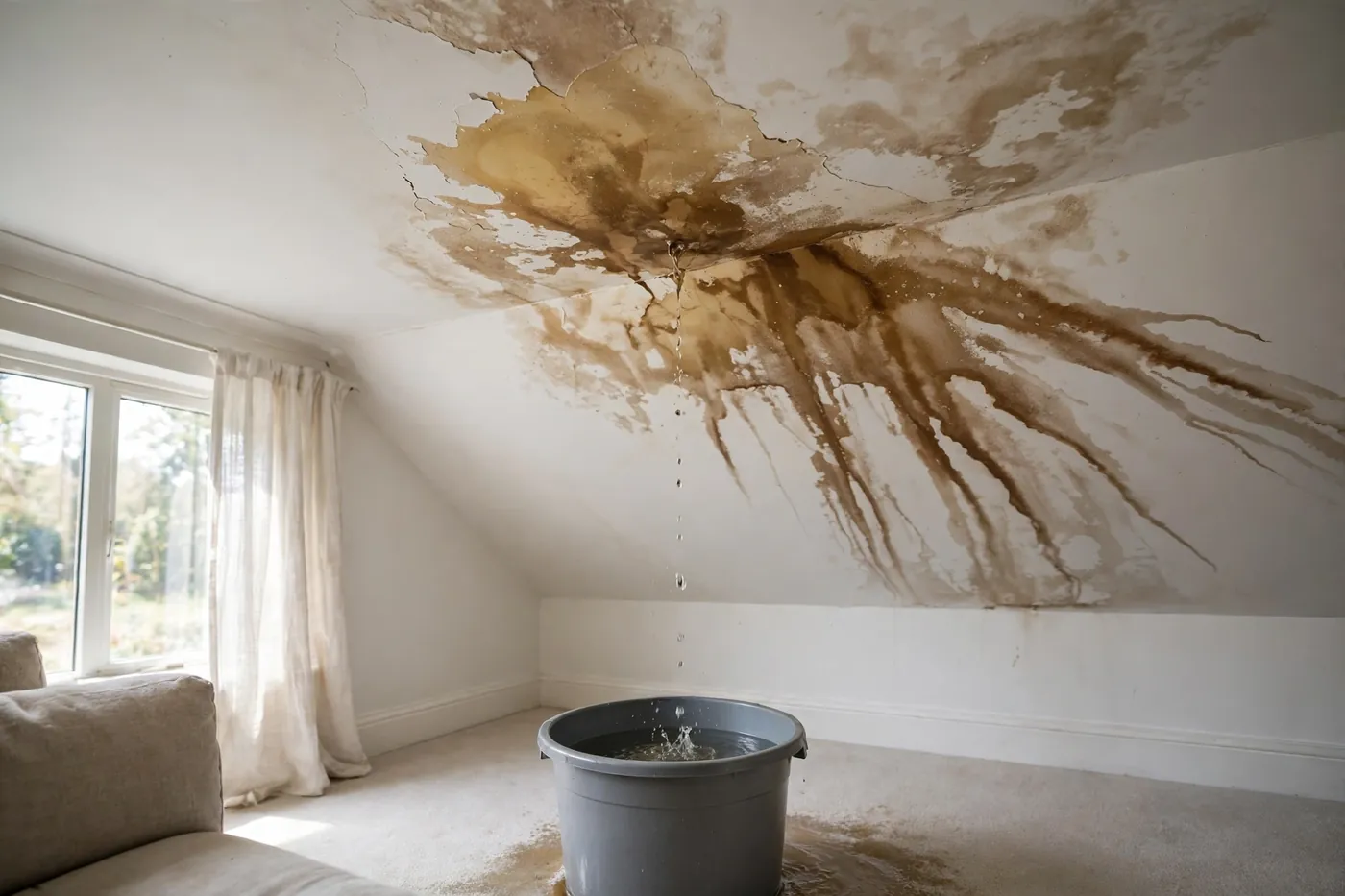
Water's travel habit explains why Dogwood Azalea stains mislead. Rain that gets in at a valley or a flashing joint runs downhill along decking and rafters before it drops, so the ceiling stain can sit well away from the opening, sometimes in a room with no roof joint above it. Homeowners often assume the worst when they see a stain in a living room, when the actual opening is a short valley repair uphill, or they assume a small stain means a small problem, when the water has been traveling across decking for some time.
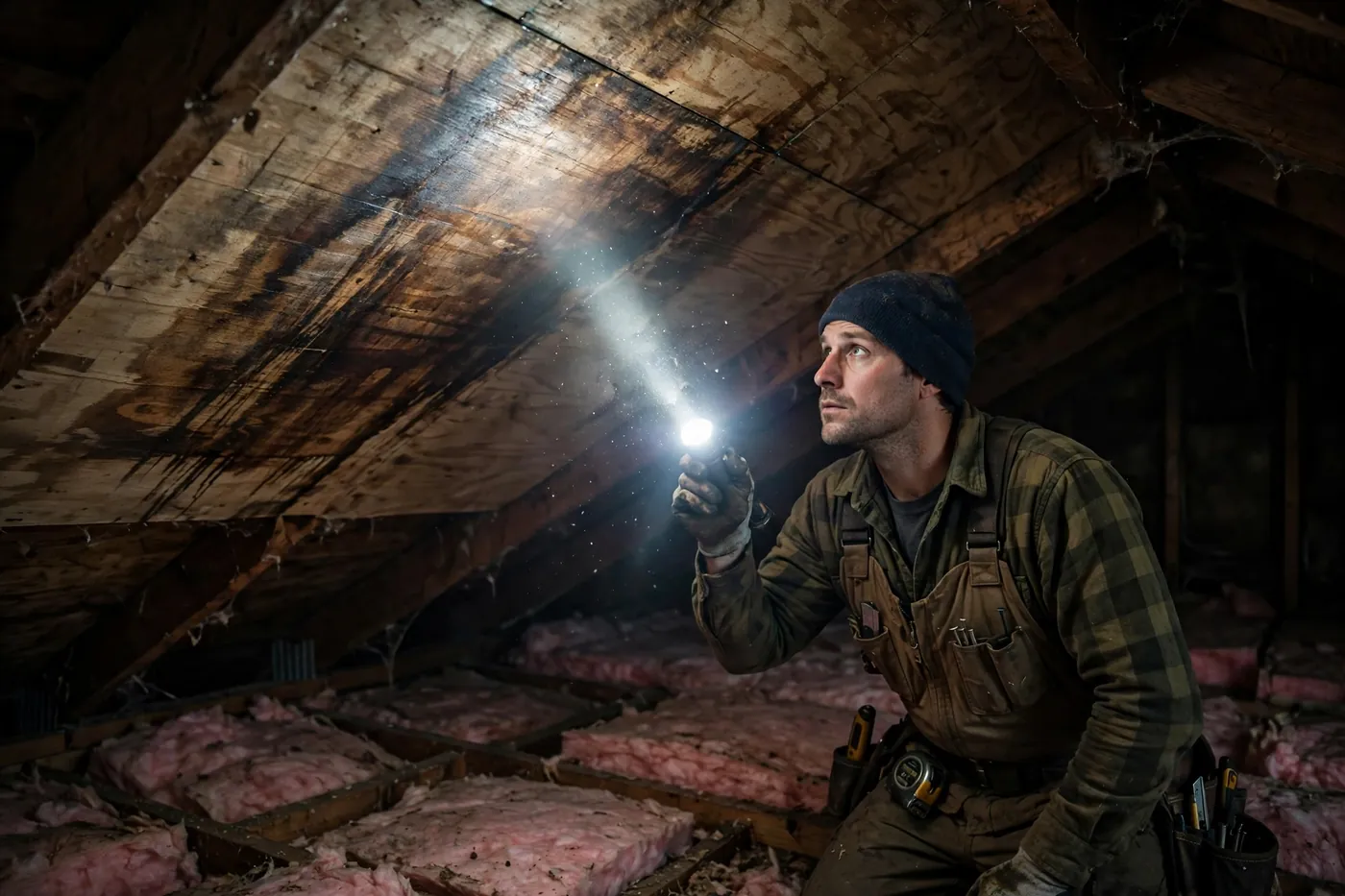
The attic check sorts it out. A damp line in the insulation, stained decking, and rusted nail heads all trace a path uphill, and the repair belongs at the end of that path. That is also why a stain that seems to move between storms is not moving at all: the water is simply finding a different exit from the same opening.
December and January storms bring the kind of rain that finds shaded-roof weaknesses. Wind drives rain under lifted edges and into valley mouths already holding debris, so a roof that stayed dry through calm summer rain can leak for the first time in a winter storm. Noting which storms bring the leak back helps place it, because a storm-only pattern points to a wind-exposed joint rather than a roof-wide failure.
Owensboro's Green River region humidity adds condensation to the picture in winter. Warm, moist air from the house that reaches a cold attic condenses on decking and drips onto insulation, leaving marks that look like a leak on mornings with no rain. Sealing gaps at the ceiling line and keeping the attic vented reduce that risk, and a check that weighs storm timing against cold-morning timing keeps a condensation issue from being repaired as a shingle failure.
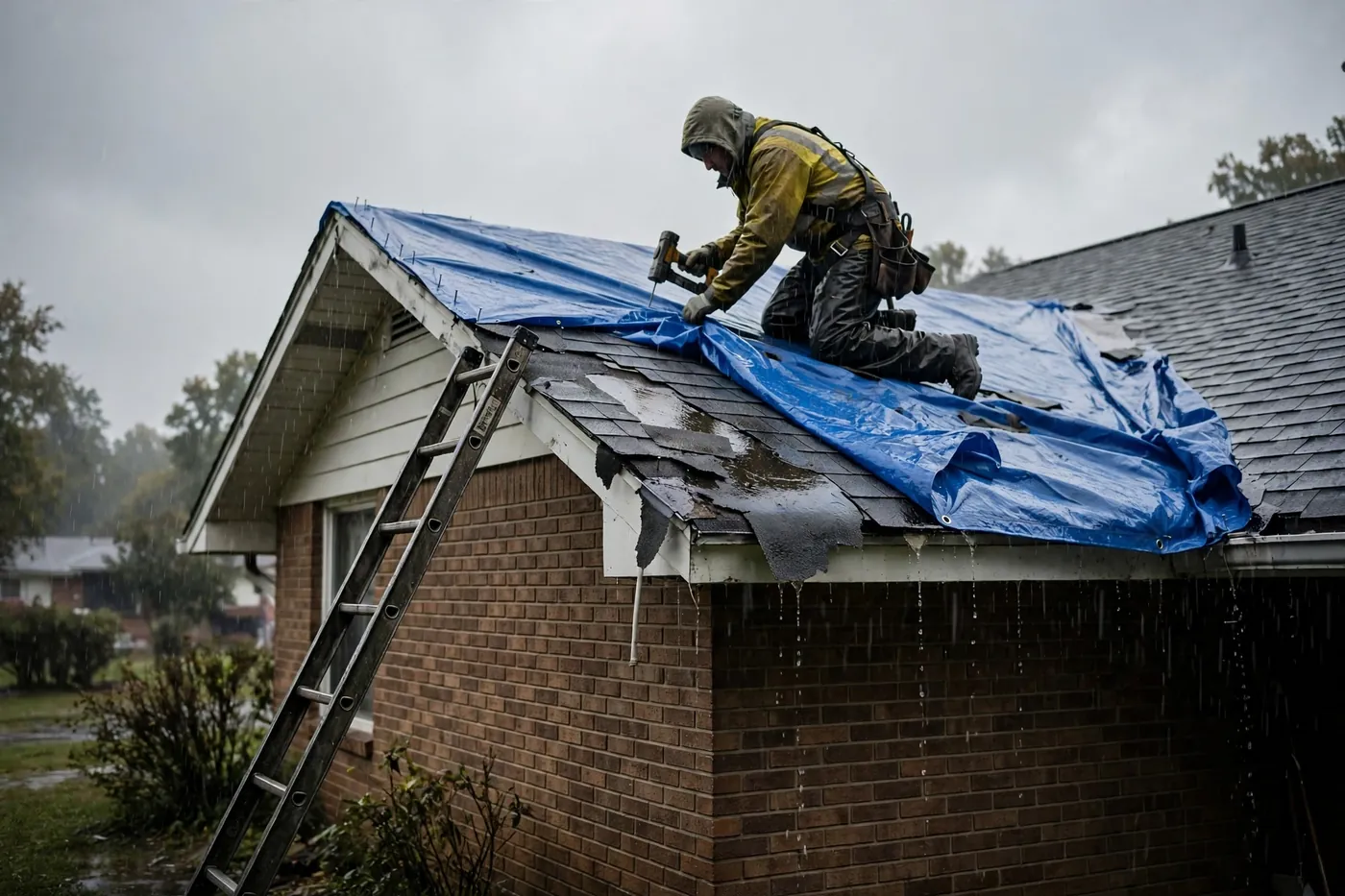
When a leak appears, move belongings out from under the drip, catch the water, and photograph the stain with some surrounding ceiling in the frame. Note the weather and whether the dampness has shown up before, and if the attic is safe to enter, follow the damp line and see where it heads. Stay off a wet or shaded roof, which stays slick longer than an open one. Call now with those notes and the repair can be aimed at the source rather than the stain.
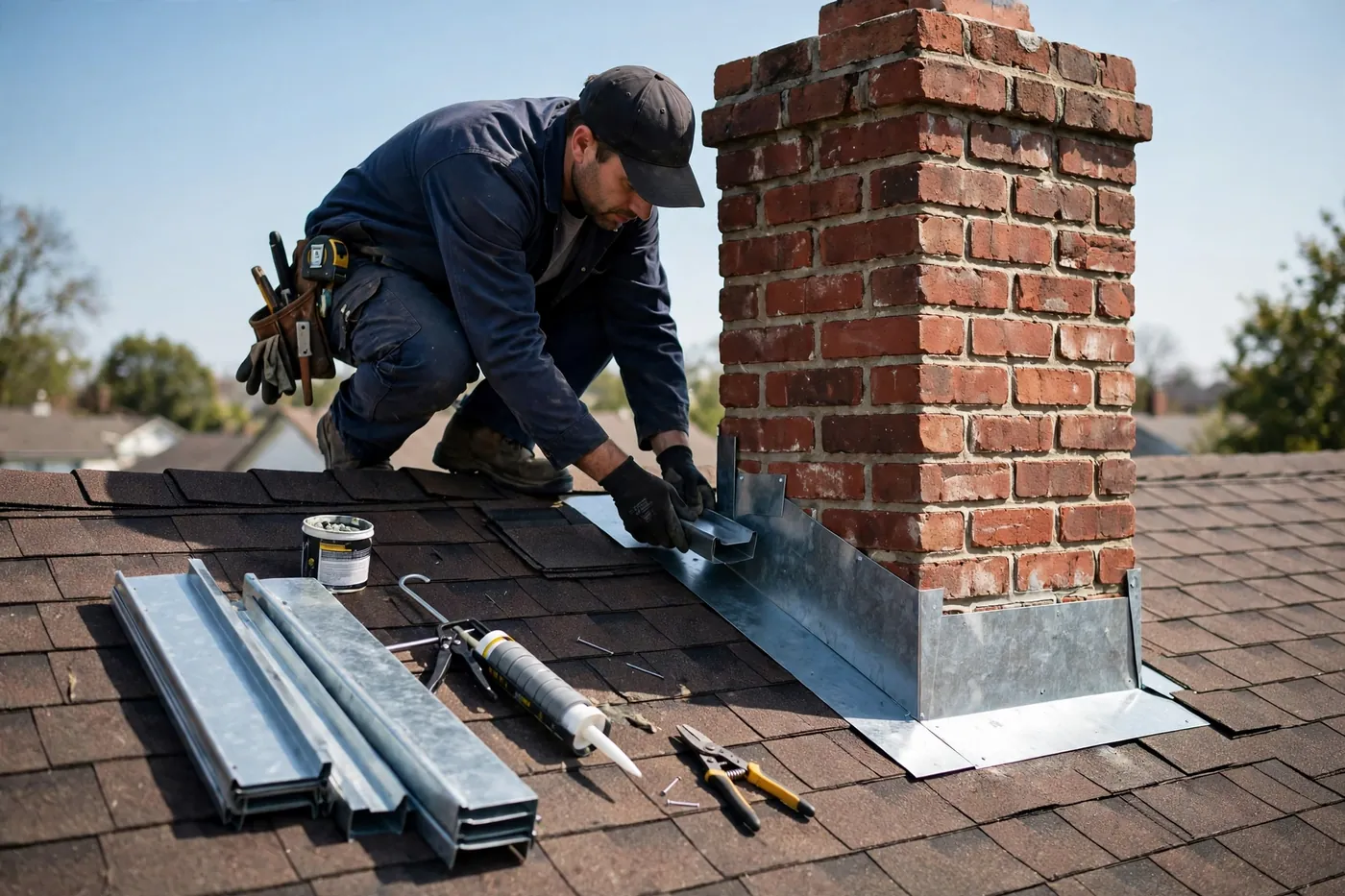
Repair scope in Dogwood Azalea depends on what that check finds: the size of the damaged area, whether decking or valley metal must be replaced, how steep and shaded the slope is, and whether structural work falls under Owensboro Metropolitan Planning Commission permit rules. Repairs matched to NRCA and ARMA guidance, with wind resistance standards such as ASTM D7158 considered where they apply, are fitted to the roof and its shade and tree cover, not just to the stain on the ceiling.
Back to roof leak repair in Owensboro for the full service list.
Shade itself does not leak, but it keeps a roof damp longer after rain, and dampness feeds algae growth and softens debris into mats that hold water in valleys. In a humid river city that effect is stronger, and it shows up first on north-facing and heavily shaded slopes.
Water runs along rafters and decking before it drops, so a stain can sit well away from the opening. An attic check that follows the damp line uphill toward a valley, flashing joint, or vent is the reliable way to place the repair.
Condensation appears on cold mornings without rain, when warm, humid indoor air meets cold attic surfaces. A leak follows rain and leaves a trail back to a roof joint. Timing and attic evidence separate the two.
The size of the damaged area, whether decking or flashing must be replaced, how shaded and steep the roof is, and whether permit rules apply to the scope. Finding the true source first keeps the job focused.
Call now — emergency calls come first.
TAP TO CALL NOW