Emergency roof leak repair in Owensboro starts with one clear goal: keep water out of the living space while the real source of the leak is found. A drip on a ceiling rarely means the hole is directly above it. Water gets under a shingle or a piece of flashing, runs along a rafter or the top of the decking, and drops through wherever gravity and a seam let it go. That is why a quick patch over the stain often fails, and why the first visit matters as much as the final repair.
Homes across Daviess County face the same pattern after heavy rain and wind. The Ohio River keeps humidity high through much of the year, so wet insulation and decking dry slowly once water gets in. Acting early limits that spread. The steps below cover what to do in the first minutes, what an attic-first inspection looks for, and how a repair scope is put together so you can see exactly what will be fixed and why.
What to do right now when water comes in
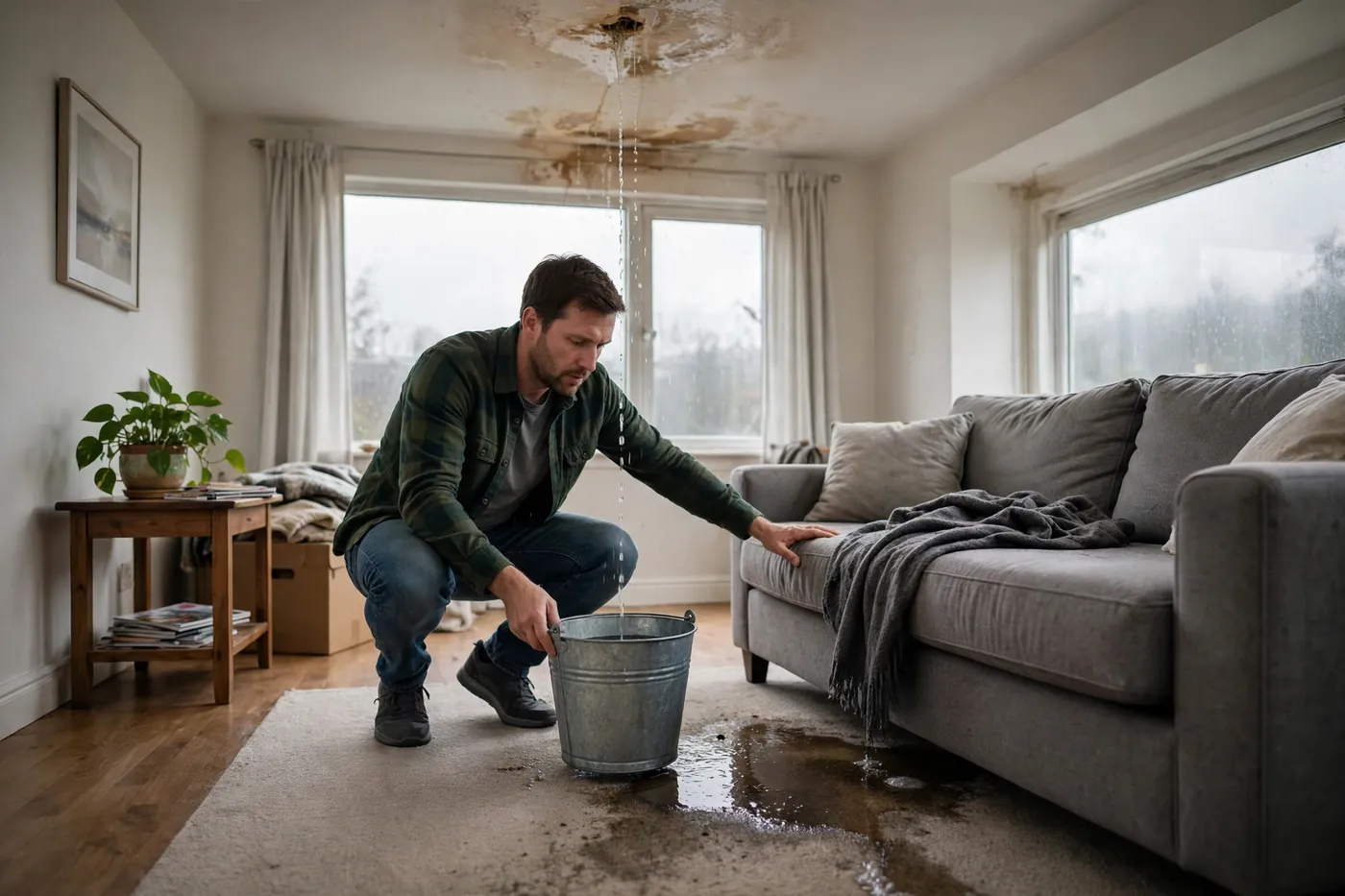
Move furniture, rugs, electronics, and anything that soaks up water away from the drip line, then put a bucket or a large container under it. If a ceiling bulge is holding water, do not poke it open on your own — a bulge can release a large amount of water at once and bring ceiling material down with it. Lay towels around the container to catch splashes, and keep people out from directly underneath a sagging section.
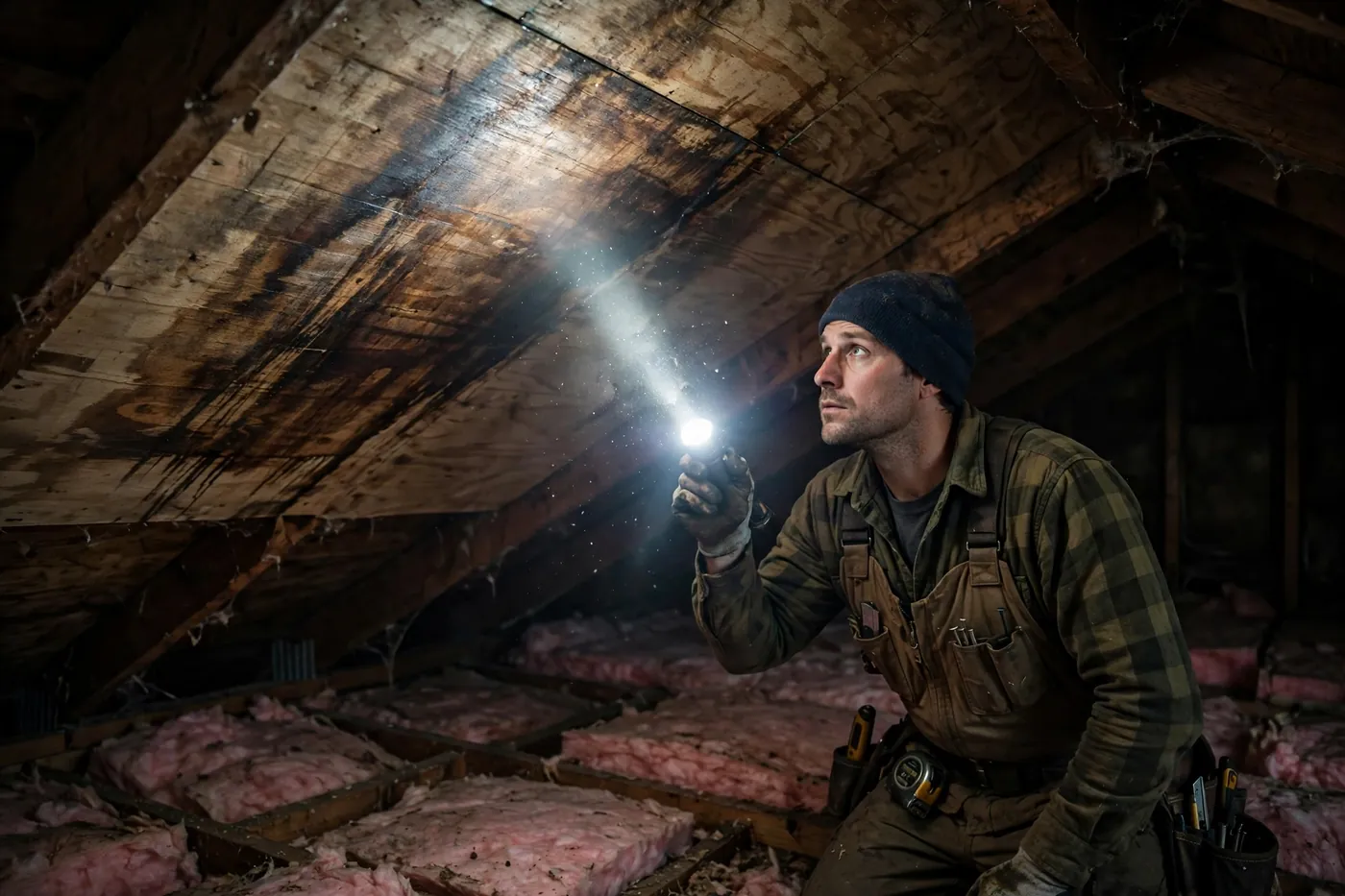
In the attic, if you can get up there safely and the floor is solid, look for the wet path rather than only the drip point. Note where insulation is soaked, where decking looks dark or swollen, and whether water is running along a rafter. Take photos of the drip, the stain, and anything wet in the attic. Those photos help later with both the repair plan and any insurance conversation, and they cost nothing to take.
- Catch the drip and protect floors, furniture, and belongings underneath it
- Switch off power to any light or outlet near the wet ceiling if it is safe to reach the breaker
- Photograph the stain, the drip, and wet insulation or decking in the attic
- Note when the leak started and whether it lines up with wind, heavy rain, or melting ice
Why the inspection starts in the attic, not on the stain
A ceiling stain is a symptom, not a diagnosis. Water that enters at a chimney, a valley, or a lifted shingle can travel several feet before it finds a gap in the ceiling below. An attic-first inspection follows that path backward: wet rafters, stained decking, damp insulation, and daylight showing through a gap all point uphill toward the entry point. Without that step, a repair can seal the wrong spot while the real opening keeps letting water in.
The inspection also checks what the water has already touched. Wet insulation loses much of its ability to insulate, and decking that stays damp can soften and swell. In a humid river town, that drying process is slow, so finding every wet section matters. A thorough check looks at the whole slope above the stain, not just the square foot around it, and it checks flashing at chimneys, walls, and skylights on that same slope.
Stopping the water before the permanent repair
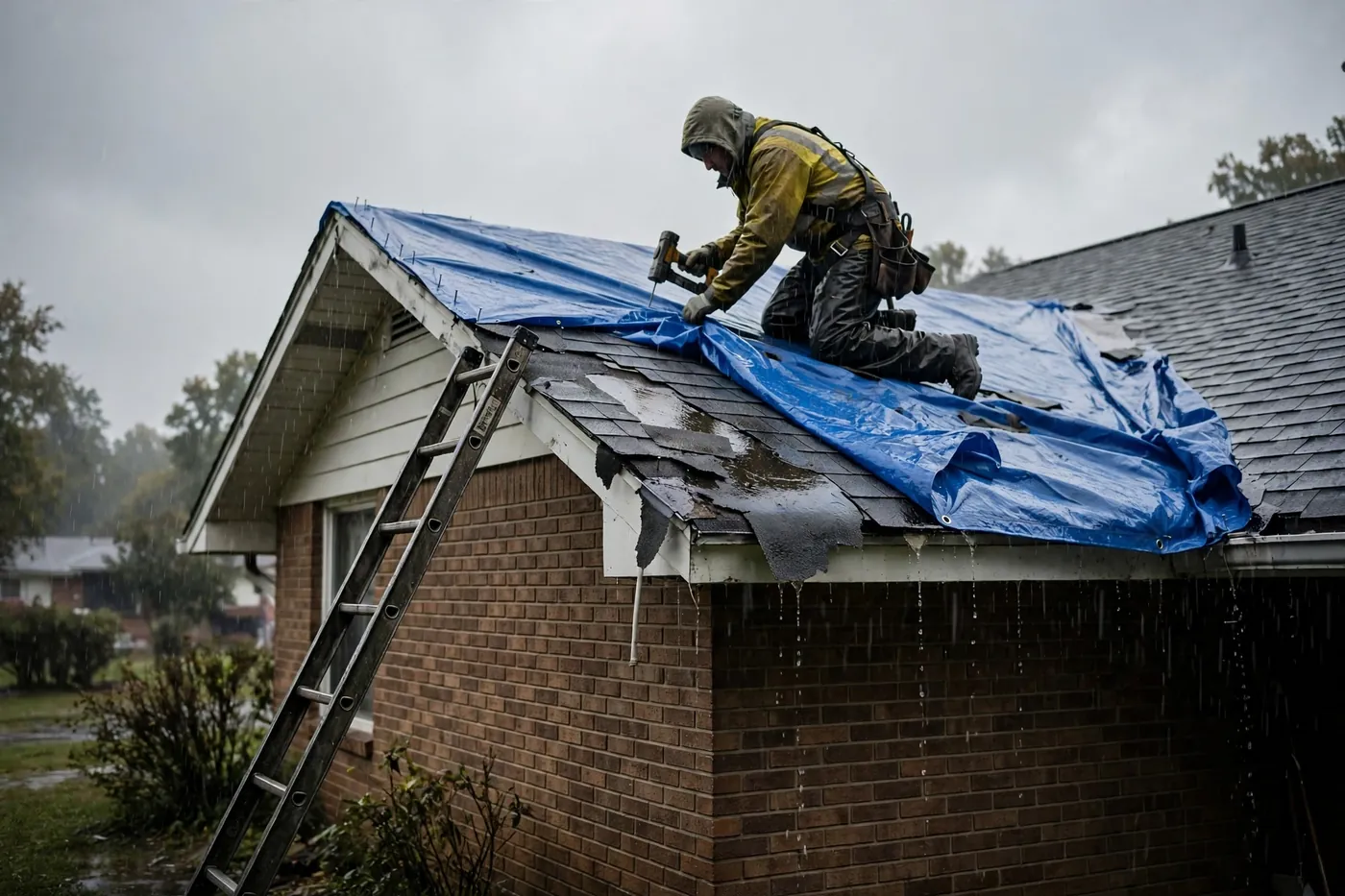
Temporary protection is about buying time without creating a bigger problem. A tarp or temporary cover over the affected slope can keep rain out until the permanent repair is done, but it has to be secured so wind does not lift it and so it does not trap water underneath. Inside, the aim is simpler: keep the drip contained, keep wet material from spreading, and keep the area safe to walk through.
Temporary work is not a substitute for a repair. Sealant smeared over a lifted shingle or a cracked piece of flashing may hold for one storm and fail in the next, especially when wind lifts the same tab again. The written scope that follows an emergency visit should separate what was done to stop the water from what still needs fixing, so nothing temporary is mistaken for finished work.
December and January storms in the Green River region
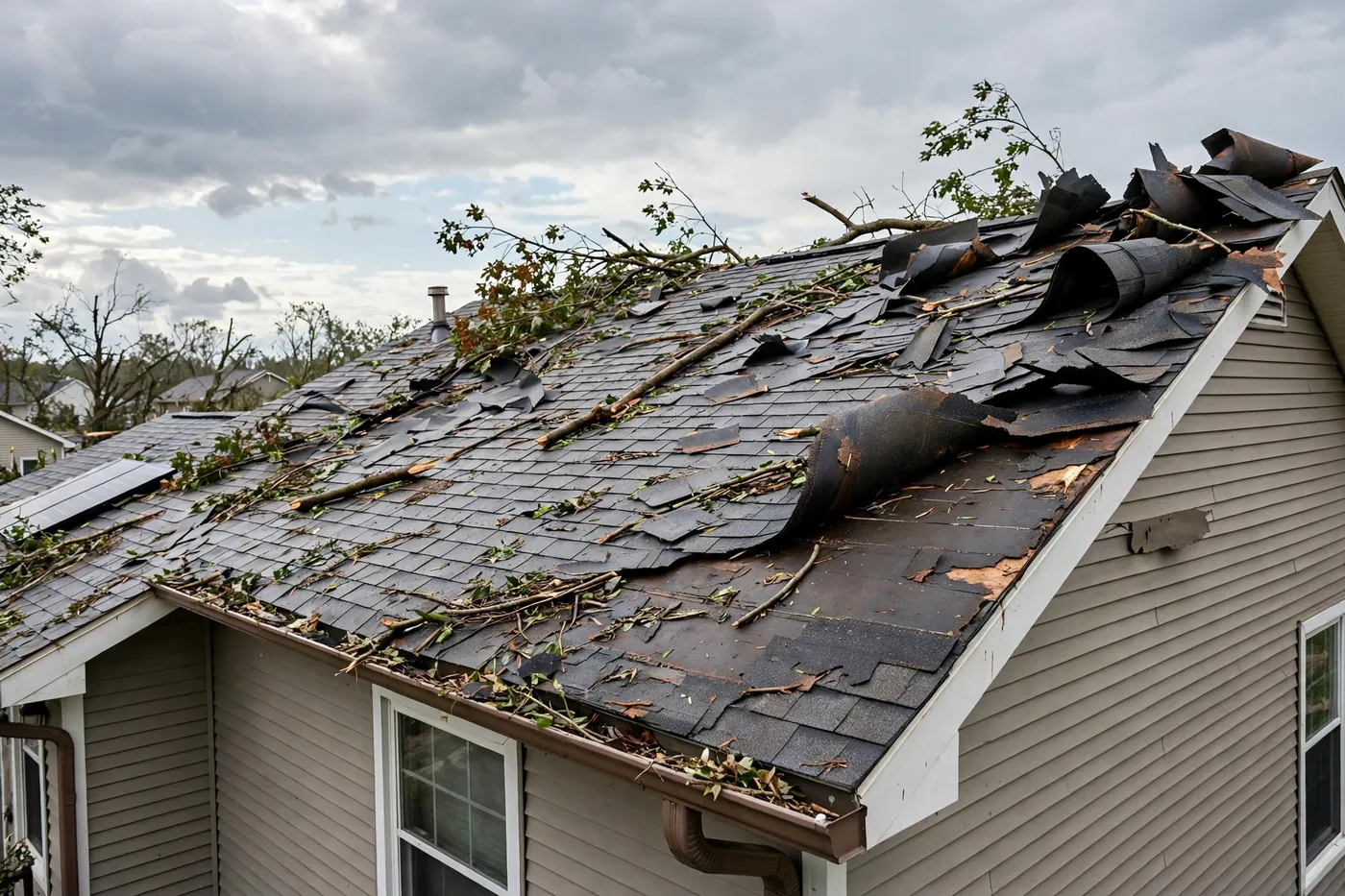
Owensboro sits in the Green River region, and the hardest roof weather often arrives in December and January, when strong wind, heavy rain, and sudden temperature swings hit in the same week. Wind lifts shingle tabs and breaks seal strips, rain then finds the lifted edge, and a freeze can widen a small crack in flashing or sealant. A leak that first shows up in a winter storm may have started months earlier as a lifted tab that only leaked once wind drove rain sideways under it.
That history is part of why older roofs here deserve a close look after a storm, not just a glance from the ground. Owensboro still remembers the F3 tornado of January 3, 2000, and while most storms are far less severe, the same lesson applies at a smaller scale: wind damage is often scattered across a slope rather than confined to one spot. An emergency visit after a storm should check the full slope and the ridges, valleys, and flashing on it, not only the place where water came through.
Photos, a written scope, and what affects the cost
Before any permanent work starts, you should see photos of the entry point and the damage, plus a written scope that names what will be repaired, what materials will be used, and what parts of the roof were checked and found sound. That record protects both sides: you know what you are paying for, and there is a clear reference if a question comes up later. It also gives an insurer a straightforward account of what happened and what was found.
Several factors shape the final scope, and therefore the cost, without any single figure applying to every house. The size of the damaged area, whether decking or insulation needs replacing, how accessible the slope is, whether flashing or valley metal has to be rebuilt, and whether the work involves a chimney, skylight, or wall junction all change the job. Larger scopes may also involve Owensboro Metropolitan Planning Commission permits, and that question is checked before work starts rather than discovered partway through.
- Photos of the entry point, the wet path, and any damaged decking or insulation
- A written scope naming each repair, not a vague promise to fix the leak
- Cost factors: damaged area, decking, flashing, access, and junctions involved
- Insurance notes: dates, storm details, and photos kept together from the first day