Downtown Owensboro, Owensboro, KY
Roof Leak Repair in Downtown Owensboro
Older downtown roofs hide leaks well, so the stain on your ceiling is rarely the whole story.
24/7 Emergency ServiceResidential & CommercialOwensboro · Daviess County
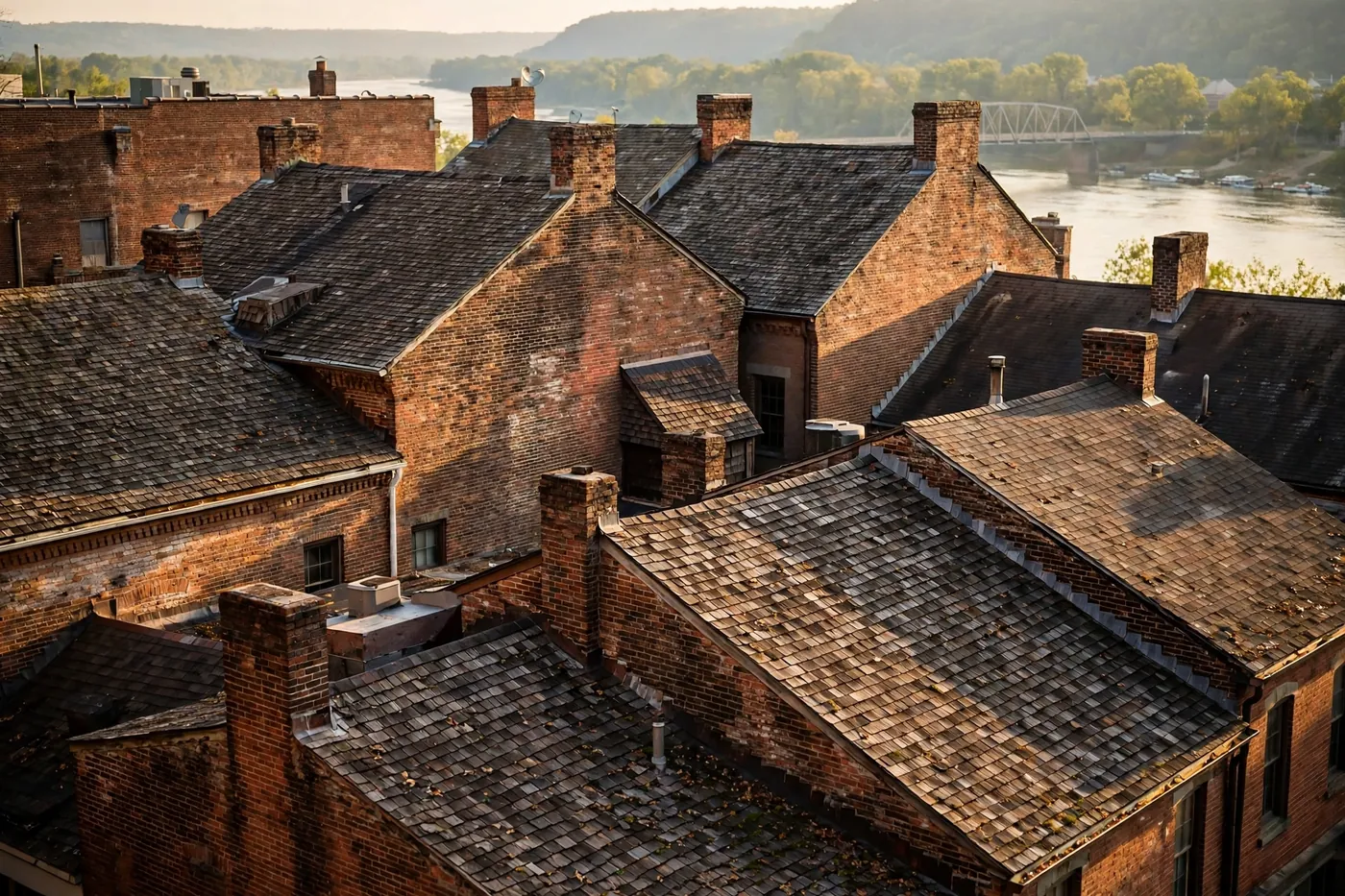
Older downtown roofs hide leaks well, so the stain on your ceiling is rarely the whole story.
Roof leak repair in Downtown Owensboro begins with the age of the roof over your head. Many homes near the center of town were built long before the subdivisions on the edge of the city, and their roofs have been patched, re-shingled, and added onto over many seasons. That history matters. A roof that has seen several rounds of work often has layers of flashing, old nail holes, and joints that no longer move the way they should when the weather turns.
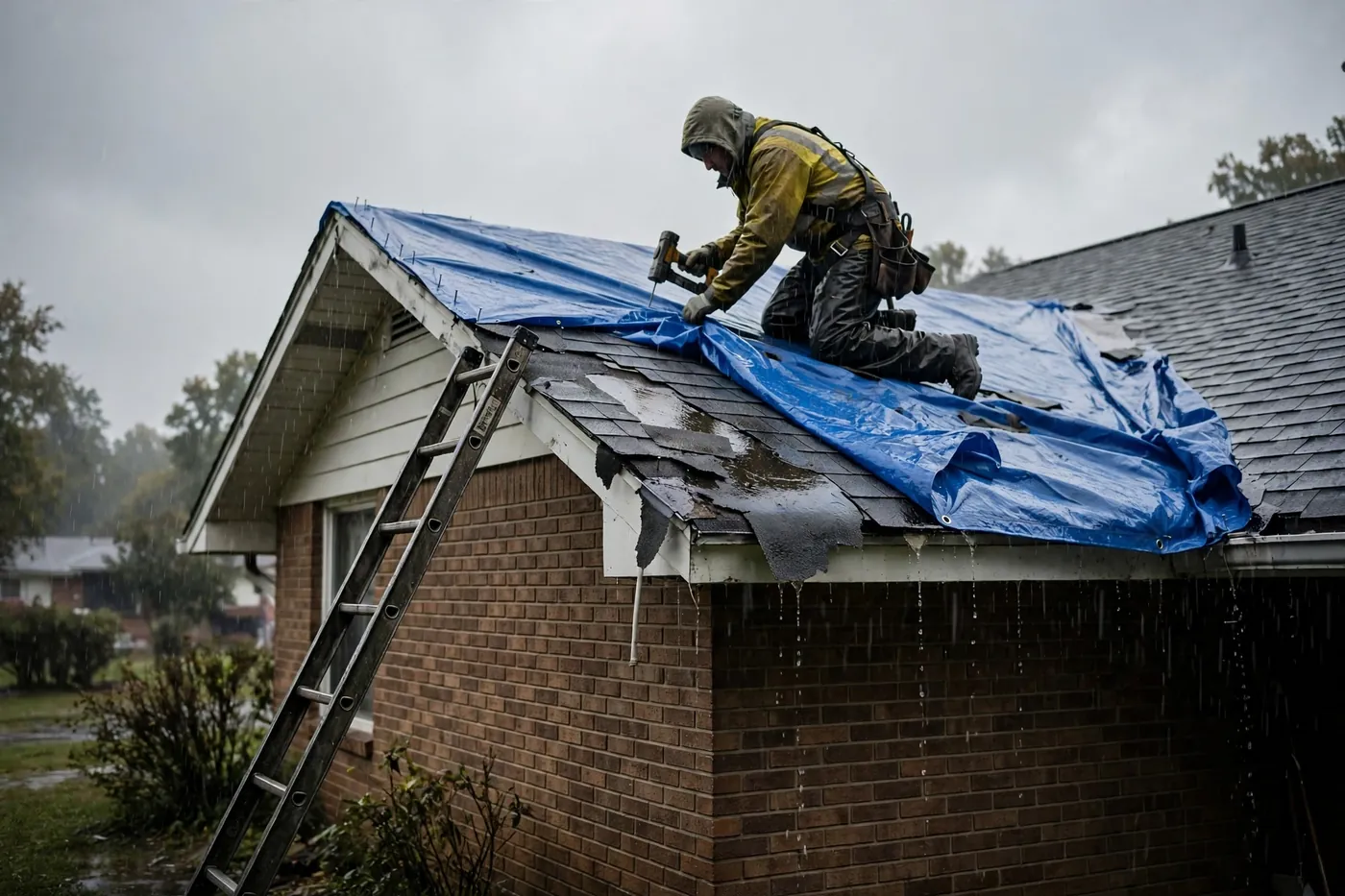
If water is coming in, call now and describe what you are seeing rather than waiting for the next rain to confirm it. A small stain can sit quietly between storms while damp insulation and decking stay wet underneath. In a river city like Owensboro, where Ohio River humidity hangs in the air, that trapped dampness does not dry out on its own the way it might in a drier place.
Downtown roofs tend to be steeper, more cut up, and more complicated than a simple ranch roof. Dormers, side porches, rear additions, and old chimney stacks break the roof into short runs and tight corners, and every one of those corners is a place water can pause and work its way in. Shingles on the sunny side may look tired while the shaded side looks fine, which is why a quick look from the street tells you very little about where a leak begins.
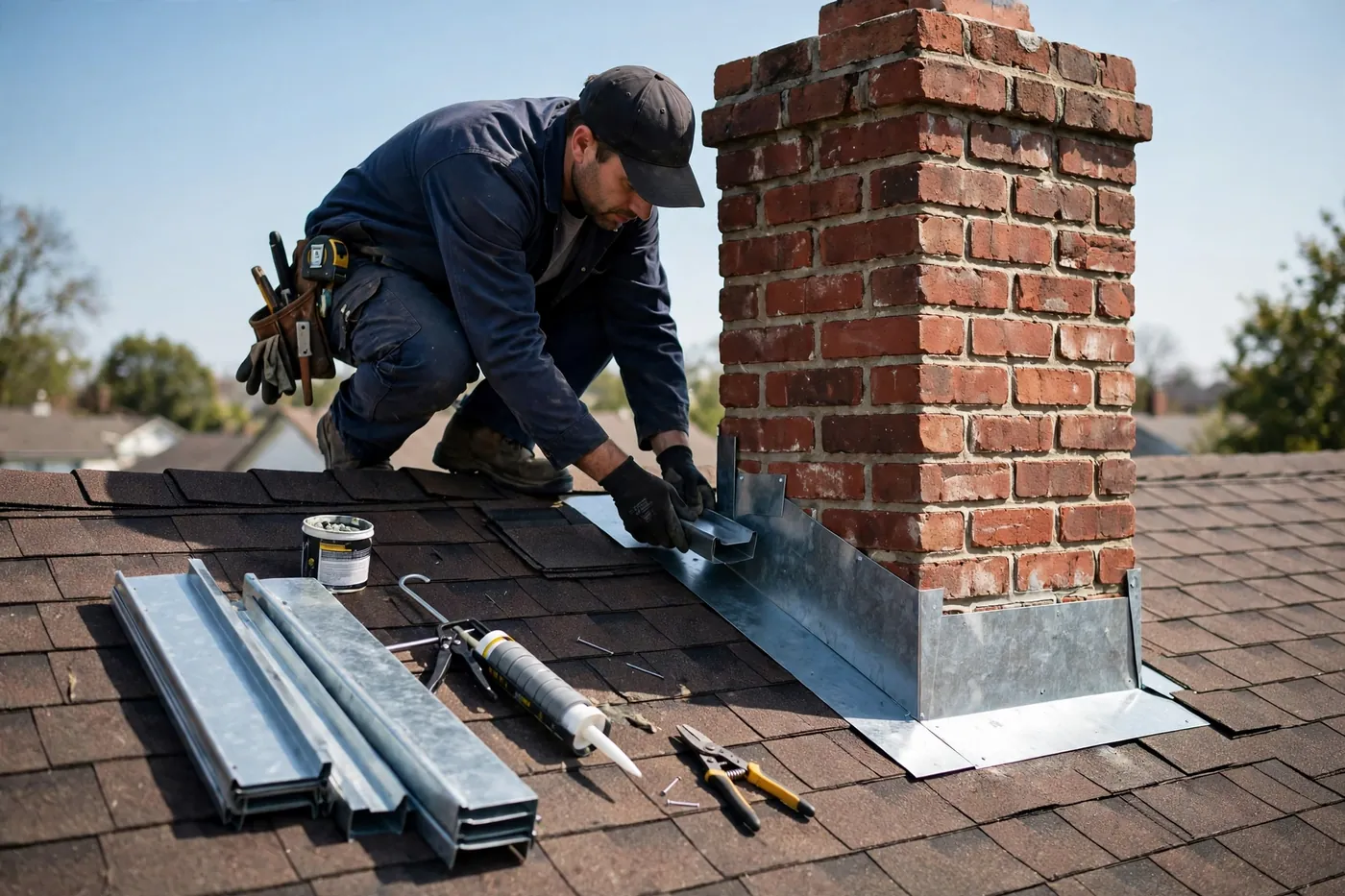
Age shows up first in the small parts. Step flashing along a wall, counter flashing at a chimney, and the sealant around vents all wear out sooner than the shingles around them. When that flashing lifts or cracks, water slips behind it during a hard rain and travels along the decking until it finds a seam, a nail, or a low spot to drop through.
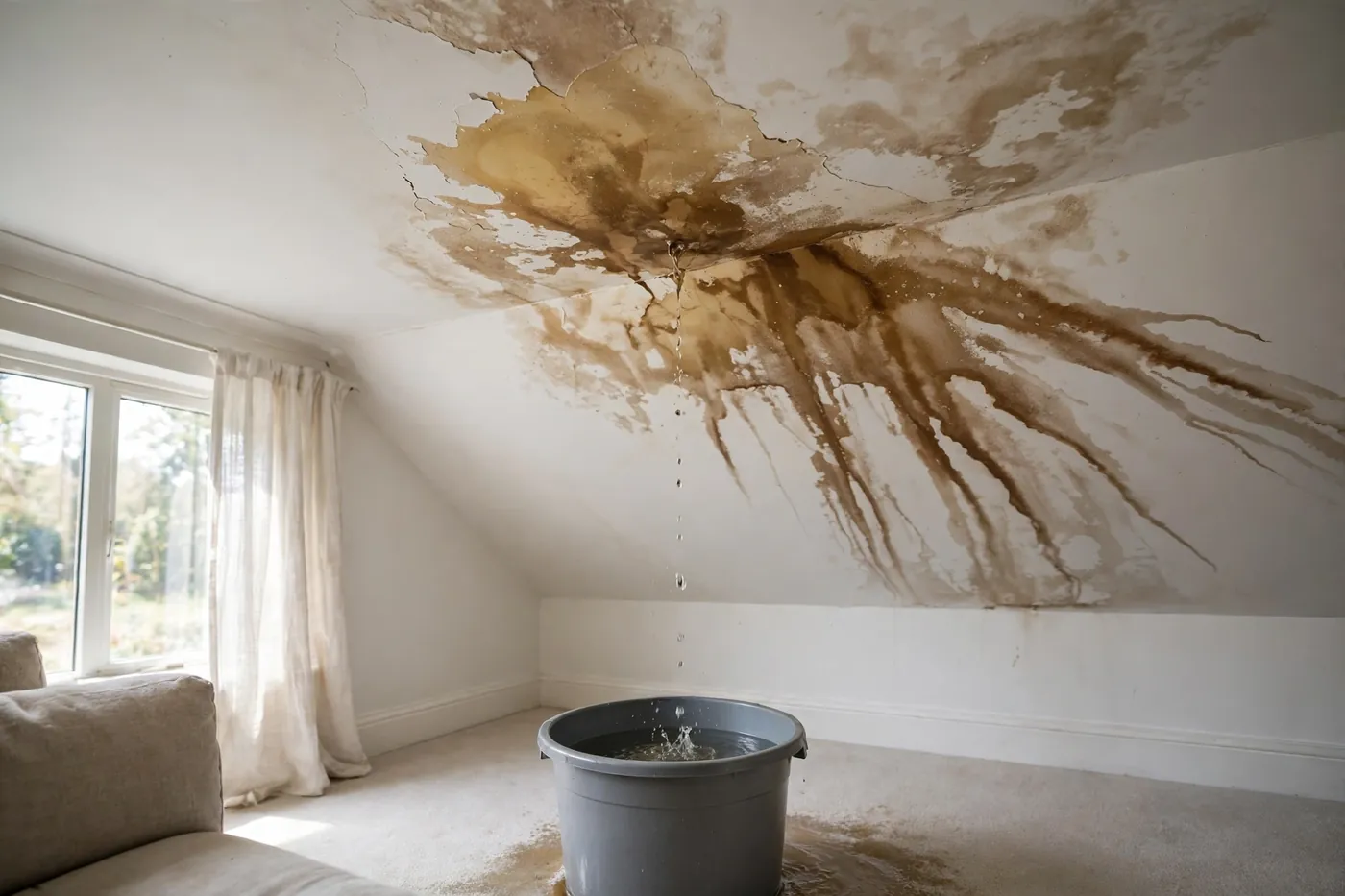
One of the most common surprises for downtown homeowners is how far water travels before it shows itself. Rain that gets in at a chimney or a valley can run along a rafter or the top of the decking and only drip down where the wood ends or a joint opens up. The stain in your living room may sit well away from the actual opening, sometimes in a different room entirely, and patching the ceiling below the stain does nothing to stop the water above it.
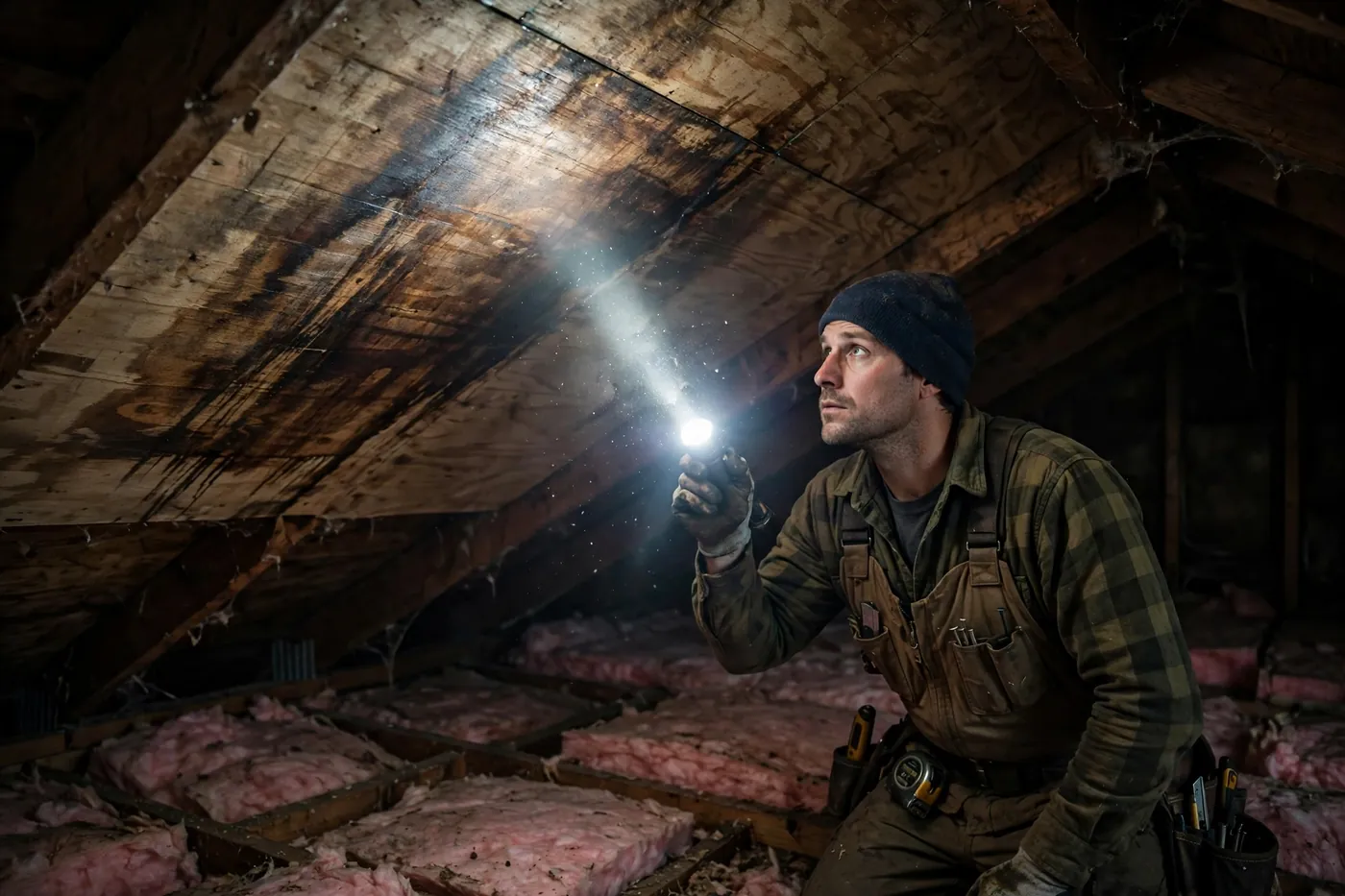
A proper check follows the path backward: up into the attic, along the rafters, and out to the roof plane above. Darkened wood, damp insulation, and rusted nail heads all point uphill toward the source. That uphill search is what separates a repair that holds from one that leaks again at the next heavy rain.
December and January storms are a real test for a downtown roof. Wind-driven rain pushes water sideways under shingles and into joints that stay dry in a straight-down summer shower, and a freeze that follows can open a small gap a little wider. After a winter storm, a leak that appeared once and then stopped still deserves a look, because the opening that let water in is still there waiting for the next wind shift.
Not every damp spot is a roof leak, though, and Owensboro's humid air makes the distinction matter. Warm, moist indoor air that reaches a cold attic surface can condense and drip in ways that look just like a leak, especially on winter mornings. Ventilation, air sealing at the ceiling, and the pattern of the dampness all help tell the two apart, and treating condensation as a shingle problem, or a leak as condensation, wastes a repair.
When you spot a leak, move furniture and anything you value out from under the drip, catch the water in a container, and take a photo of the stain and the ceiling around it. If you can get into the attic safely, note whether the dampness sits near a chimney, a valley, or a vent, and whether it is wet only after rain. Do not climb onto a wet or steep roof yourself, and do not poke at a sagging ceiling. Call now with those details and a repair plan can be built around what you actually have, not a guess.
No two downtown repairs cost the same, and any honest figure has to wait for a look at the roof. The size of the damaged area, how many layers must come off, whether decking or flashing needs replacing, how steep and cut up the roof is, and whether the work falls under Owensboro Metropolitan Planning Commission permit rules all shape the final scope. Work done to NRCA and ARMA guidance, with shingles rated to standards such as ASTM D7158 where they apply, is about matching the repair to the roof you have, not swapping in the cheapest piece that fits.
Back to roof leak repair in Owensboro for the full service list.
Water that gets under shingles or flashing often runs along rafters and decking before it drips down. It drops where the wood ends or a joint opens, which can be well away from the opening. That is why the attic above and uphill from the stain matters more than the ceiling directly below it.
A leak usually follows rain, especially wind-driven rain, and leaves a trail back to a roof joint, valley, or chimney. Condensation shows up when warm, humid indoor air meets cold attic surfaces, often on cold mornings without rain. The pattern, the timing, and the attic conditions together point to the right cause.
Move belongings out from under the drip, catch the water, and photograph the stain. Note whether it is wet only after rain and where the dampness sits in the attic if you can check safely. Then call now so the source can be traced before the next storm widens the damage.
It depends on the scope of the work. Small flashing or shingle repairs often fall outside permit rules, while larger structural or re-roofing work may fall under Owensboro Metropolitan Planning Commission requirements. The scope of your repair decides which rules apply, so ask before work begins.
Call now — emergency calls come first.
TAP TO CALL NOW