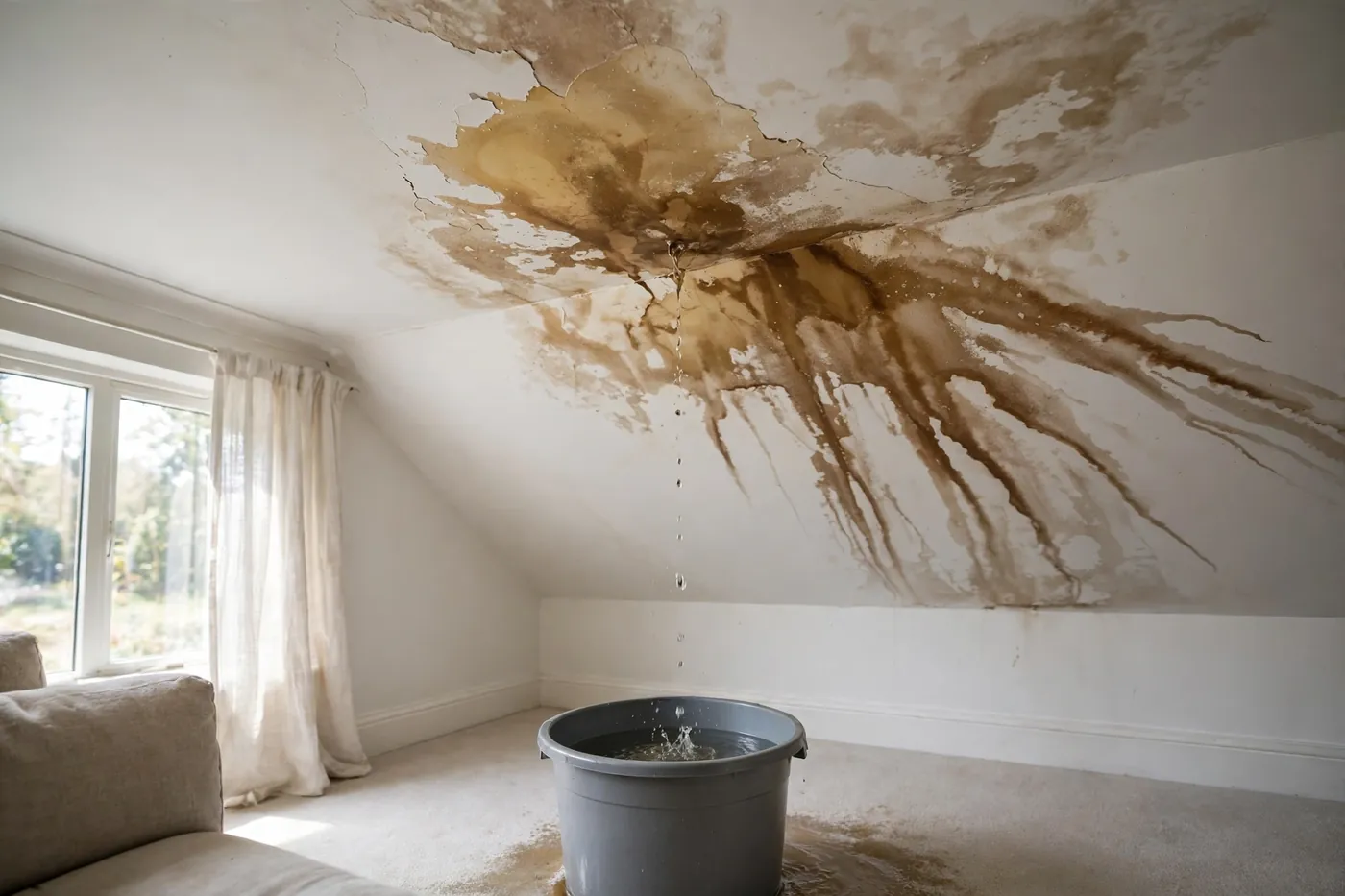
Shingle roof leak repair in Owensboro usually comes down to small failures with outsized effects. A shingle does not need to be missing for water to get in. Its seal strip only needs to let go, or a nail only needs to back out a fraction, and the next wind-driven rain has a path under the surface. From the street, the roof can look untouched. From the attic, the wet path tells a different story.
Daviess County roofs take a particular kind of punishment. Summer heat softens seal strips, winter wind works tabs loose, and December and January storms bring the sideways rain that exposes every weak seal. Repairing a shingle leak well means understanding which of those failures is at work, fixing the shingle and its neighbours, and checking the flashing and valleys on the same slope before calling the job done.
How a seal strip fails, and why wind finds it
An asphalt shingle sheds water in two ways: by overlapping the shingle below it, and by sealing to it along a strip of adhesive. That seal strip is what keeps wind from lifting the tab. Heat, age, and repeated wind flexing all weaken it. Once it lets go, the tab flutters in wind, and rain driven sideways can run uphill underneath it, past the nail line, and onto the underlayment and decking.
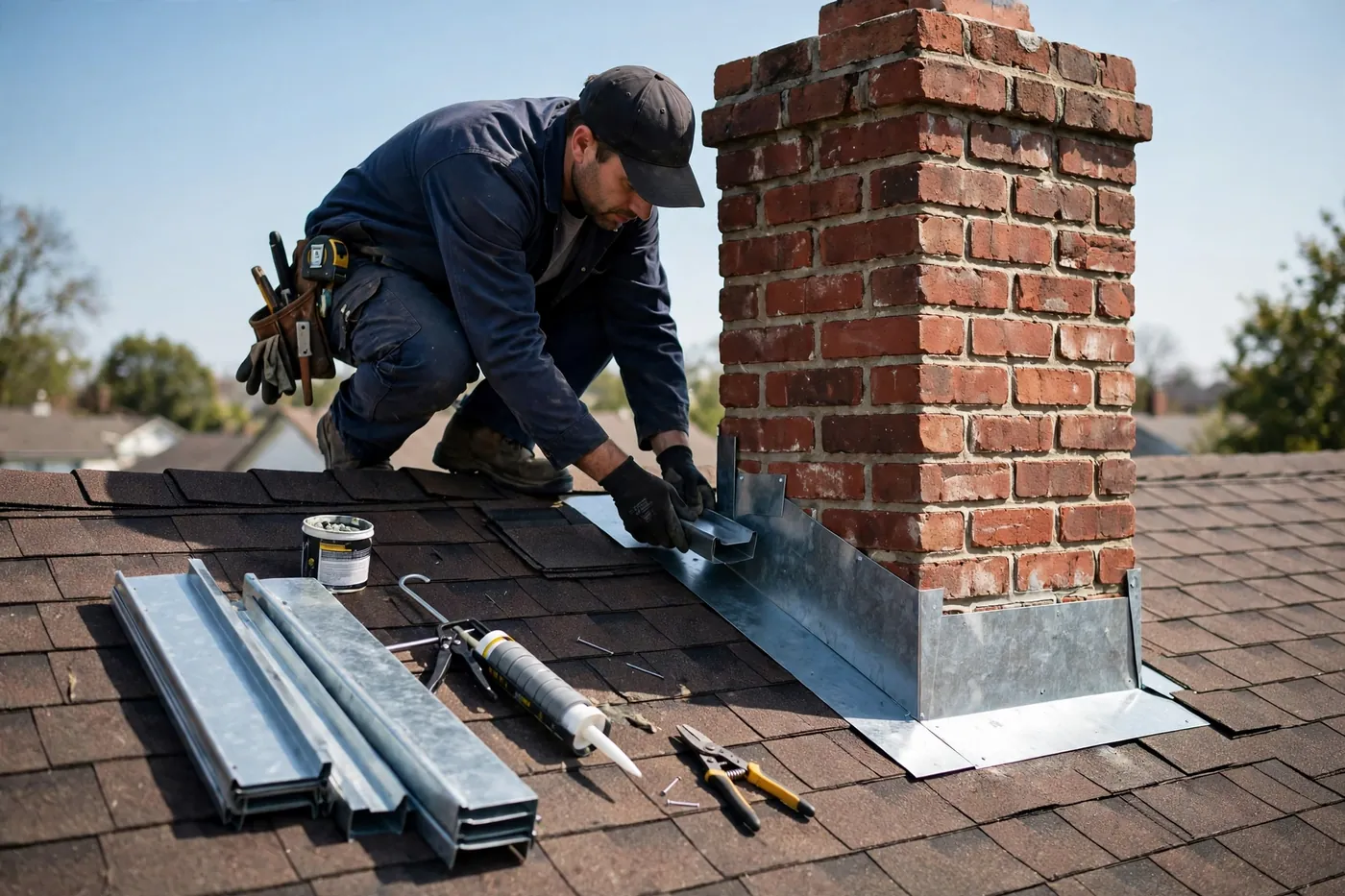
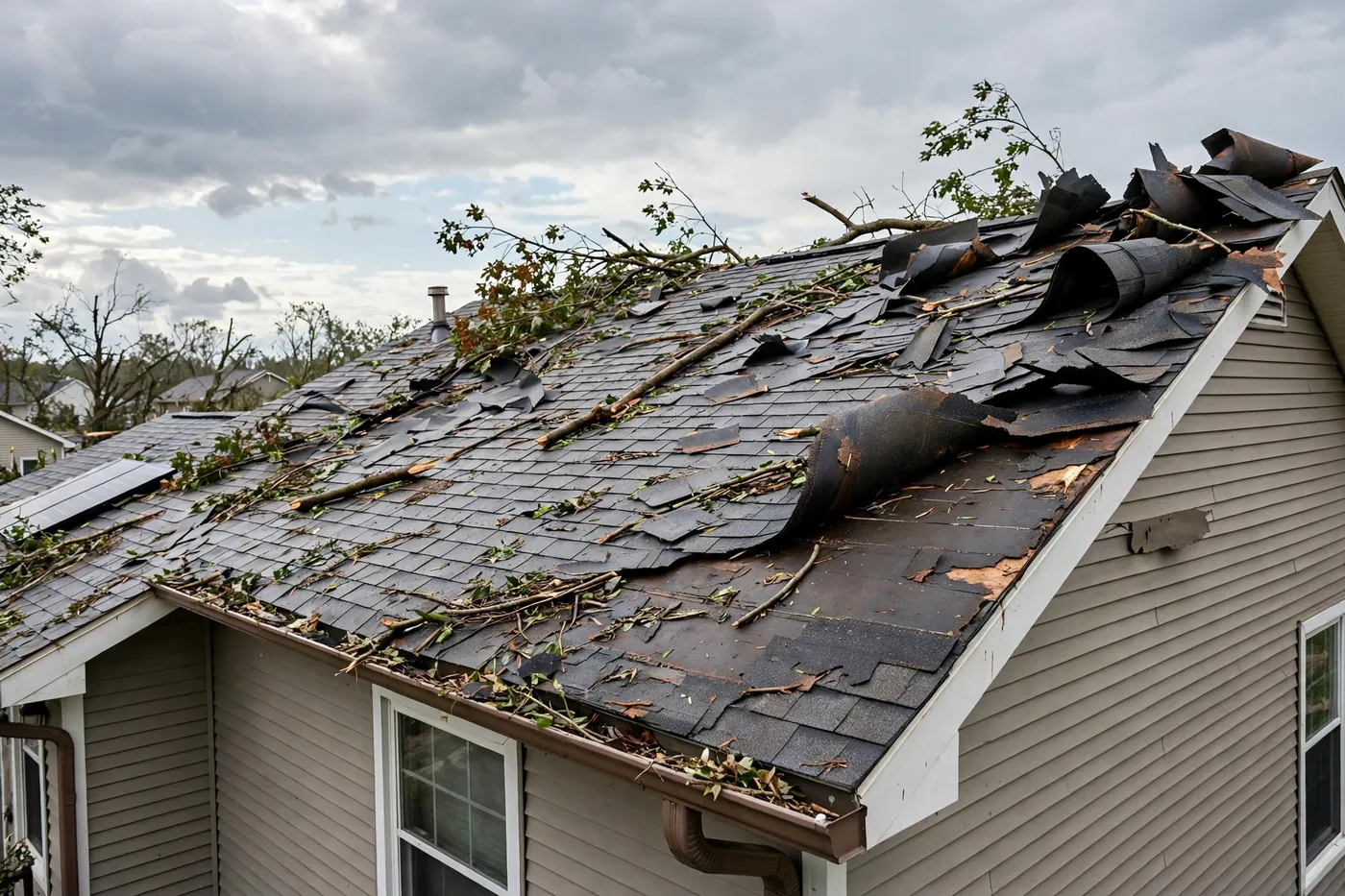
That is why wind damage after an Owensboro storm often hides in plain sight. Shingles may still be in place, in neat rows, with no obvious gap. A hand check finds the problem: a tab that lifts easily and does not spring back has lost its seal. Repairs here are not about replacing the most visibly damaged shingle alone. Neighbouring tabs on the same course often share the same weakened seal, and leaving them in place invites the same leak a storm or two later.
Six nails, placed right, and what ASTM D7158 means
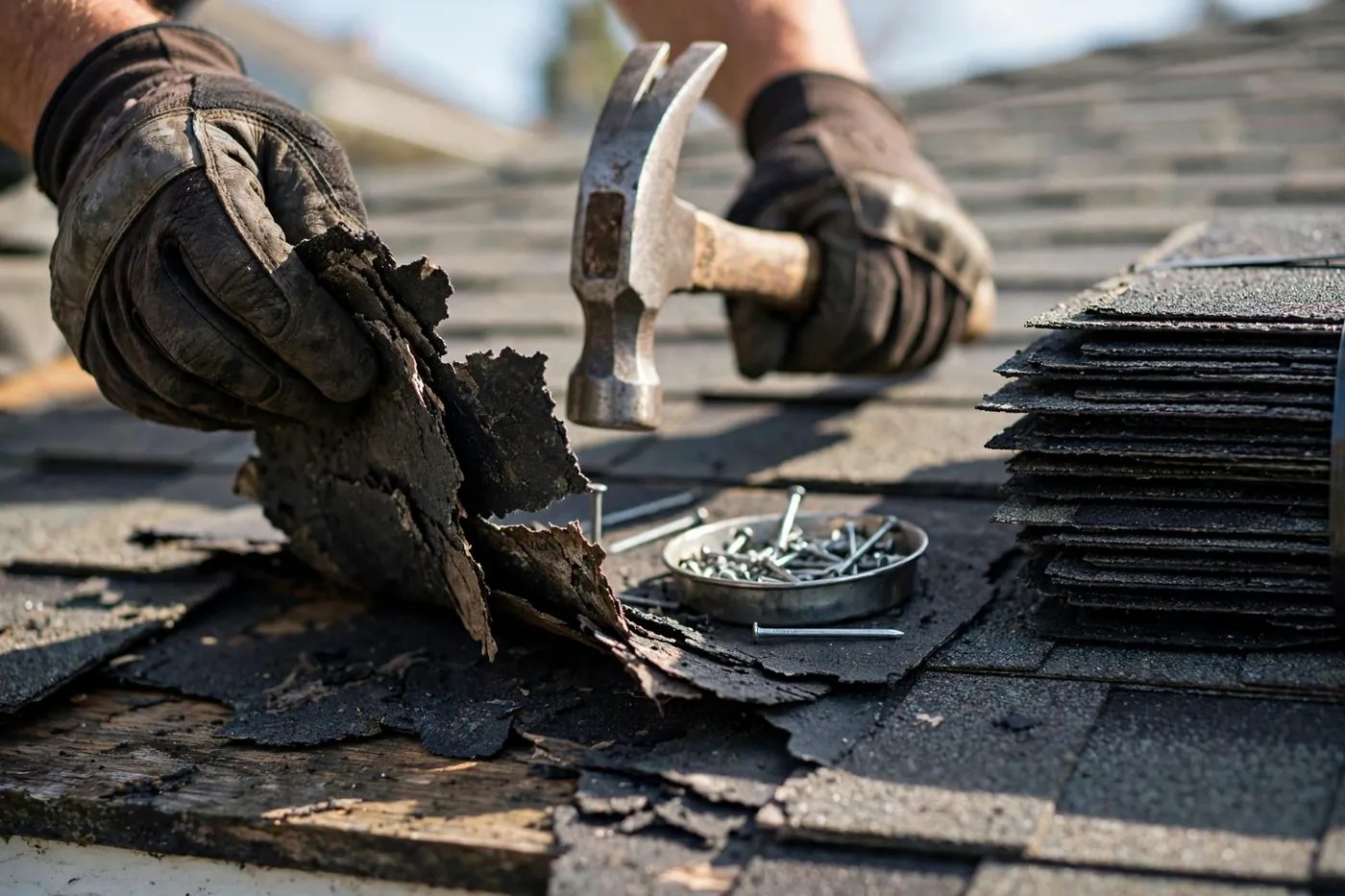
Fastening is the part of a shingle repair that nobody sees once the job is done, and it is the part that decides whether the repair holds. Six-nail fastening places nails so the shingle is held across its width rather than only at its corners, which gives wind less leverage to lift a tab. Nail placement matters as much as nail count: a nail driven too high misses the shingle below, and a nail driven too deep cuts into the mat it is meant to hold.
Shingle standards give this work a reference point. NRCA and ARMA guidance covers installation practice for asphalt shingles, and ASTM D7158 sets a wind-resistance classification for shingles themselves. A repair should respect both — the right shingle for the wind exposure, fastened the way the guidance describes, rather than a quick nail-and-sealant fix that looks finished from the ground and fails at the next storm.
- Six-nail fastening spreads wind load across the shingle instead of concentrating it
- Nail height matters: too high misses the course below, too deep damages the mat
- NRCA and ARMA guidance describes sound asphalt shingle installation practice
- ASTM D7158 classifies shingles by wind resistance, a useful check when choosing replacements
Nail pops, underlayment, and what hides under a shingle
Not every shingle leak is a shingle problem. Nail pops — nails that have worked their way up through the shingle surface — leave a raised bump and a hole that rain follows straight down. Thermal movement in the decking, a nail that missed a rafter or truss, and repeated freeze-and-thaw cycles in a Green River winter can all push a nail up over time. A popped nail near a valley or a wall junction causes more trouble than one in the middle of a field, because water already concentrates at those junctions.
Underlayment condition matters here too. A shingle repair that replaces the visible shingle but leaves torn or rotted underlayment underneath is a repair with a hole still in it. Checking the underlayment and the decking under each damaged shingle, and replacing what is soft or torn, is slower than a surface patch. It is also the difference between a repair that survives the next December storm and one that does not.
When a patch holds, and when the neighbours rule it out
A shingle repair is judged by the shingles around it as much as by the one that was replaced. Brittle, curled, or granule-bare neighbours will not seal to a new shingle properly, and a new shingle nailed into soft decking will not stay put. In that situation, widening the repair to a sound section of roof is not upselling; it is the only way the new work has something solid to bond to and fasten into.
Colour and profile matching is the visible side of the same question. Shingles weather and fade, so a brand-new shingle can stand out against an older slope even when the repair is sound. A straightforward scope says so upfront, names the shingle being used, and explains which surrounding shingles were checked. If the surrounding roof is too far gone for a tidy repair, that is a conversation to have before work starts, not a discovery made after the first patch is in.
Owensboro weather, slope by slope
Owensboro weather does not give a shingle roof a quiet season. Summer sun bakes seal strips, autumn rain tests every overlap, and winter storms in December and January bring the wind that lifts tabs and the rain that follows them in. The F3 tornado of January 3, 2000 remains the extreme example of what wind can do in Daviess County, but the everyday version — a strong winter gust across a south-facing slope — causes far more leaks over time than any single historic storm.
After a storm, the check worth doing is a slope-by-slope one. Ridges take the brunt of wind, valleys collect the water that wind pushes sideways, and the edges near gables and eaves are where tabs lift first. A repair visit that checks those zones, photographs what it finds, and writes down what was fixed and what was left alone gives you a record you can check against the next storm. If the same slope keeps losing seals, the pattern itself is information: something about that slope, its exposure, or its fastening needs a closer look.