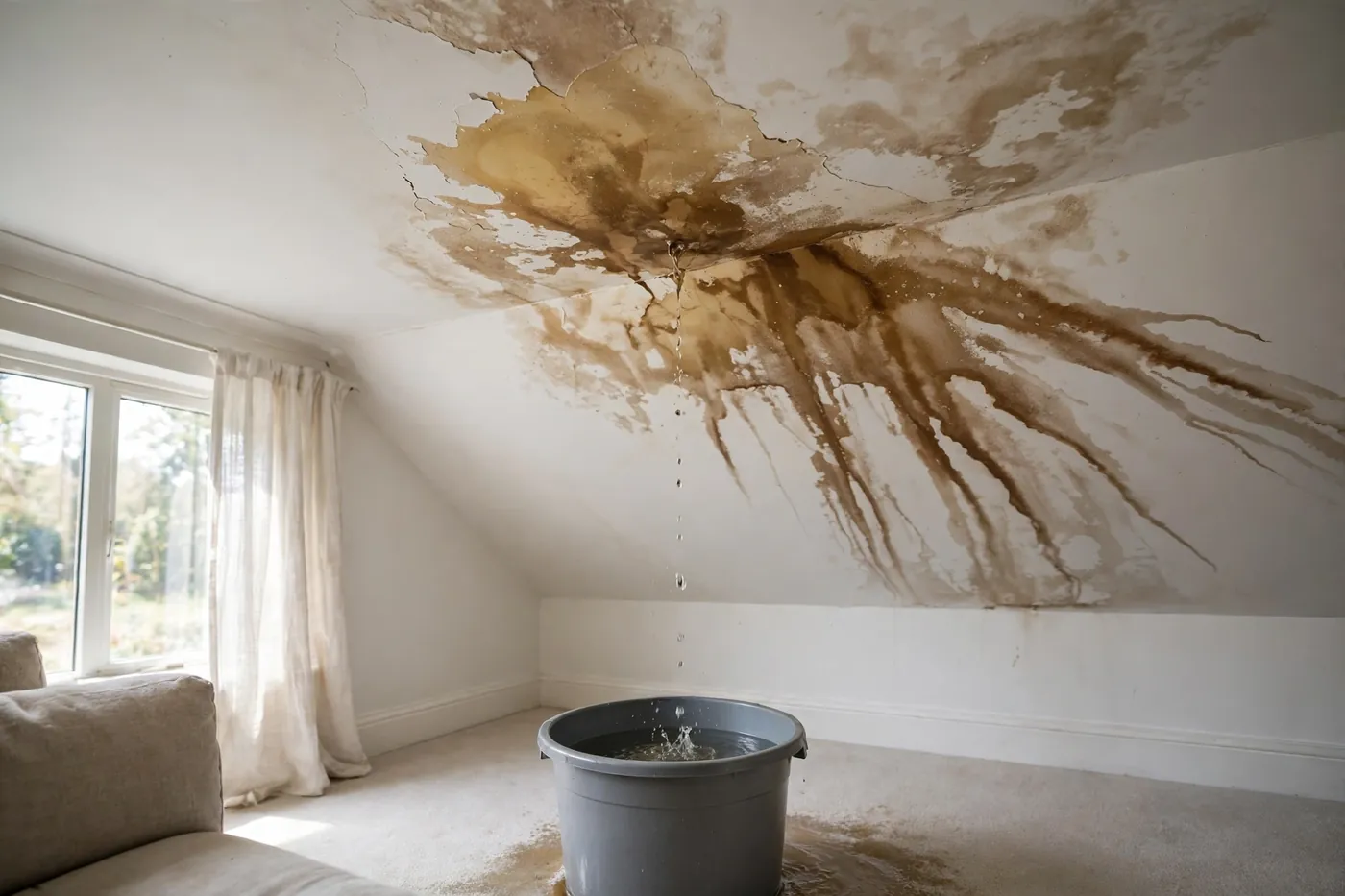
Flashing and valley leak repair in Owensboro is about junctions. A roof is mostly flat, overlapping surface, and that surface does a good job on its own. The trouble starts where the surface stops: where a roof meets a brick chimney, where it runs into a side wall, where a skylight interrupts the slope, and where two slopes meet in a valley. Each of those junctions needs metal, sealant, or both to bridge the gap, and each one can fail quietly for months before a stain appears inside.
Owensboro has plenty of brick chimneys and older homes where flashing was installed decades ago, and the Green River region's wet winters are hard on metal joints. Sealant shrinks, valley metal rusts at the points where water concentrates, and a chimney that has settled a fraction can open a gap in its counterflashing. This page explains how each junction works, how it fails, and what a proper repair checks before the shingles go back down.
Step flashing: a chain that only works as a set
Step flashing works like shingles made of metal. Each piece overlaps the shingle course below it and tucks behind the wall covering above it, so water running down the wall steps from piece to piece and back onto the roof surface. The system only works as a set. One missing or misplaced piece breaks the chain, and water slips behind the remaining pieces and into the wall or the roof deck.
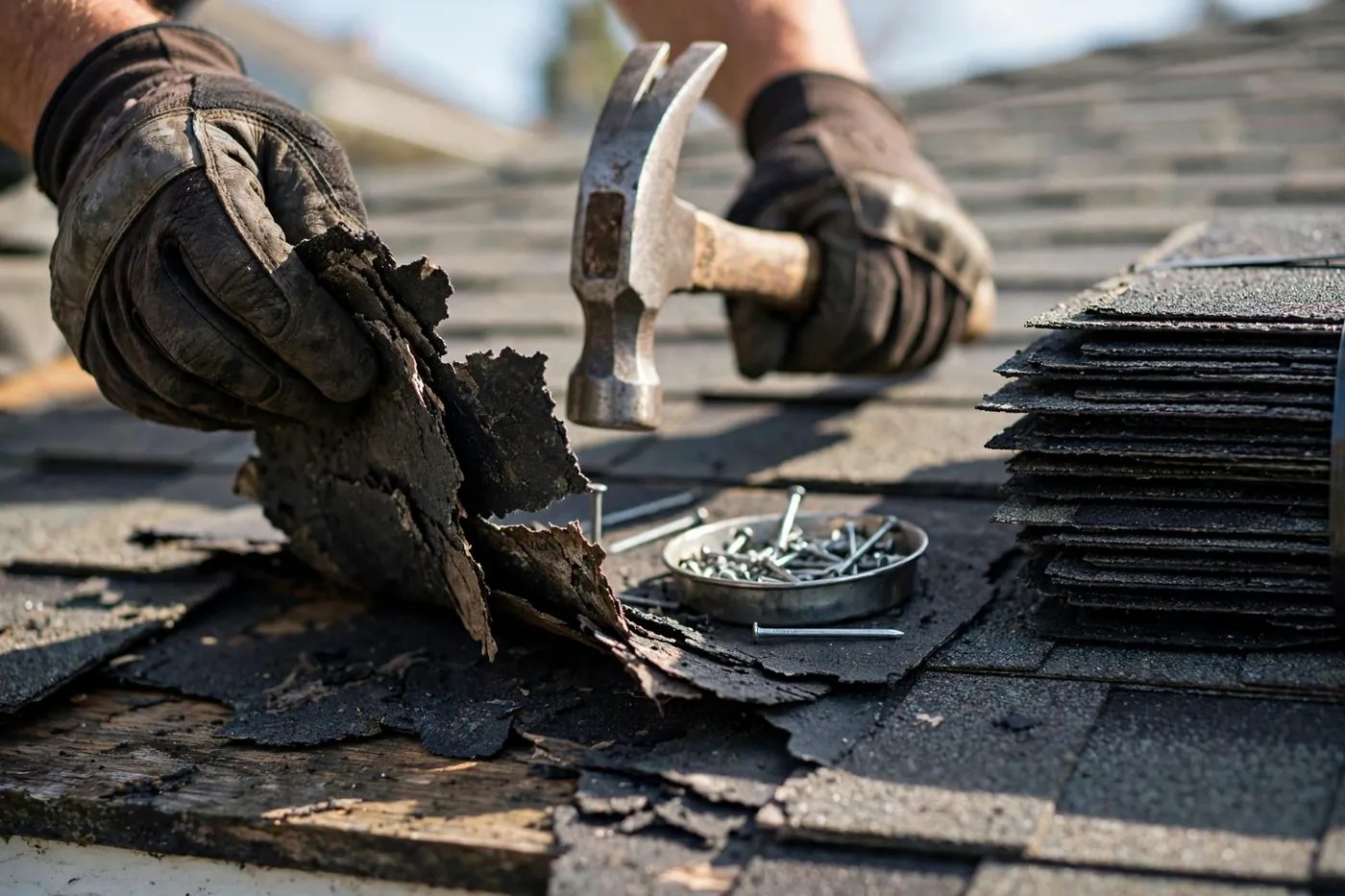
Failures here are rarely dramatic. A piece of step flashing can corrode, bend out of shape during a re-roof, or lose the seal where it meets the wall. Siding that has been replaced over old flashing can also hide the problem: the wall looks finished while the flashing underneath is no longer woven correctly. A repair at a wall junction should expose the full run of step flashing, replace damaged pieces, and re-weave them with the shingle courses rather than sealing over the top and hoping the sealant holds.
Brick chimneys and counterflashing
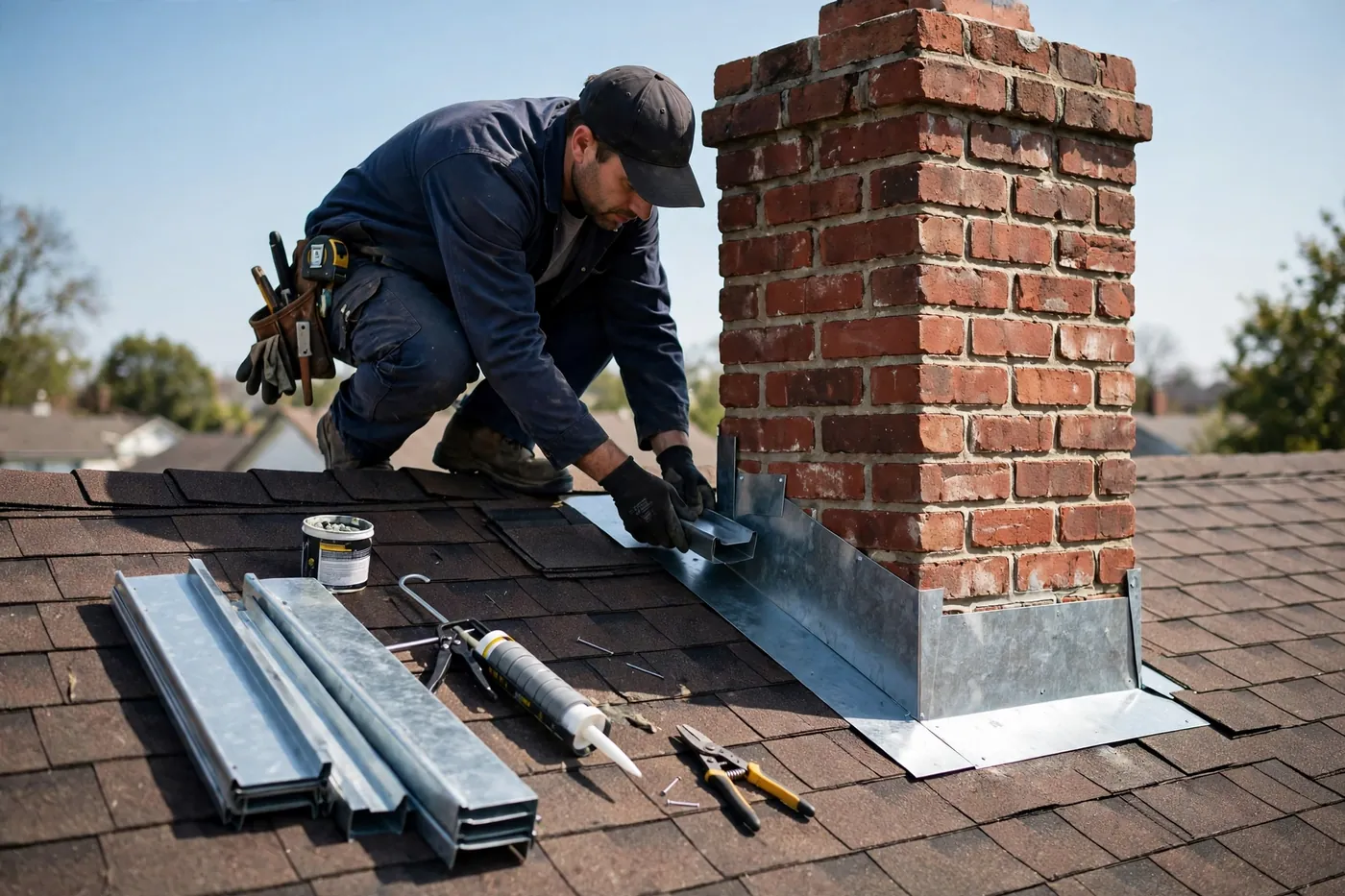
A brick chimney is a special case, because brick and mortar move differently from a wood roof deck. Counterflashing handles that movement. It is set into a reglet cut into the chimney's mortar joints and bent down over the base flashing, so water running down the chimney face is thrown clear of the joint. When the mortar joint deteriorates, or when the counterflashing itself rusts or pulls loose, water runs straight down the brick and behind the base flashing.
Owensboro's brick chimneys see repeated wetting and freezing through December and January, and mortar joints are often the first part of the chimney to show it. A chimney flashing repair therefore starts with the chimney, not the roof: the condition of the mortar, the fit of the counterflashing in its reglet, and whether the chimney has a cricket — a small peaked diverter on the uphill side that splits water around a wide chimney instead of letting it pond against the brick. Sealing the outside of a chimney without fixing its counterflashing leaves the entry point open.
- Counterflashing sits in a mortar reglet and throws water clear of the base flashing
- Deteriorated mortar lets counterflashing loosen and water run behind it
- A cricket diverts water around a wide chimney instead of ponding against brick
- Chimney condition is checked before roof flashing is sealed
Valleys, pinch points, and rust
A valley is where two roof slopes meet, and it carries more water than any other part of the roof. In an open valley, a strip of metal runs down the centre and the shingles stop short of it, so water flows over metal rather than over shingle edges. In a closed valley, shingles are woven or cut across the valley line. Both designs work when they are sound, and both fail at the same weak spot: the pinch point where the valley narrows and water flow concentrates.
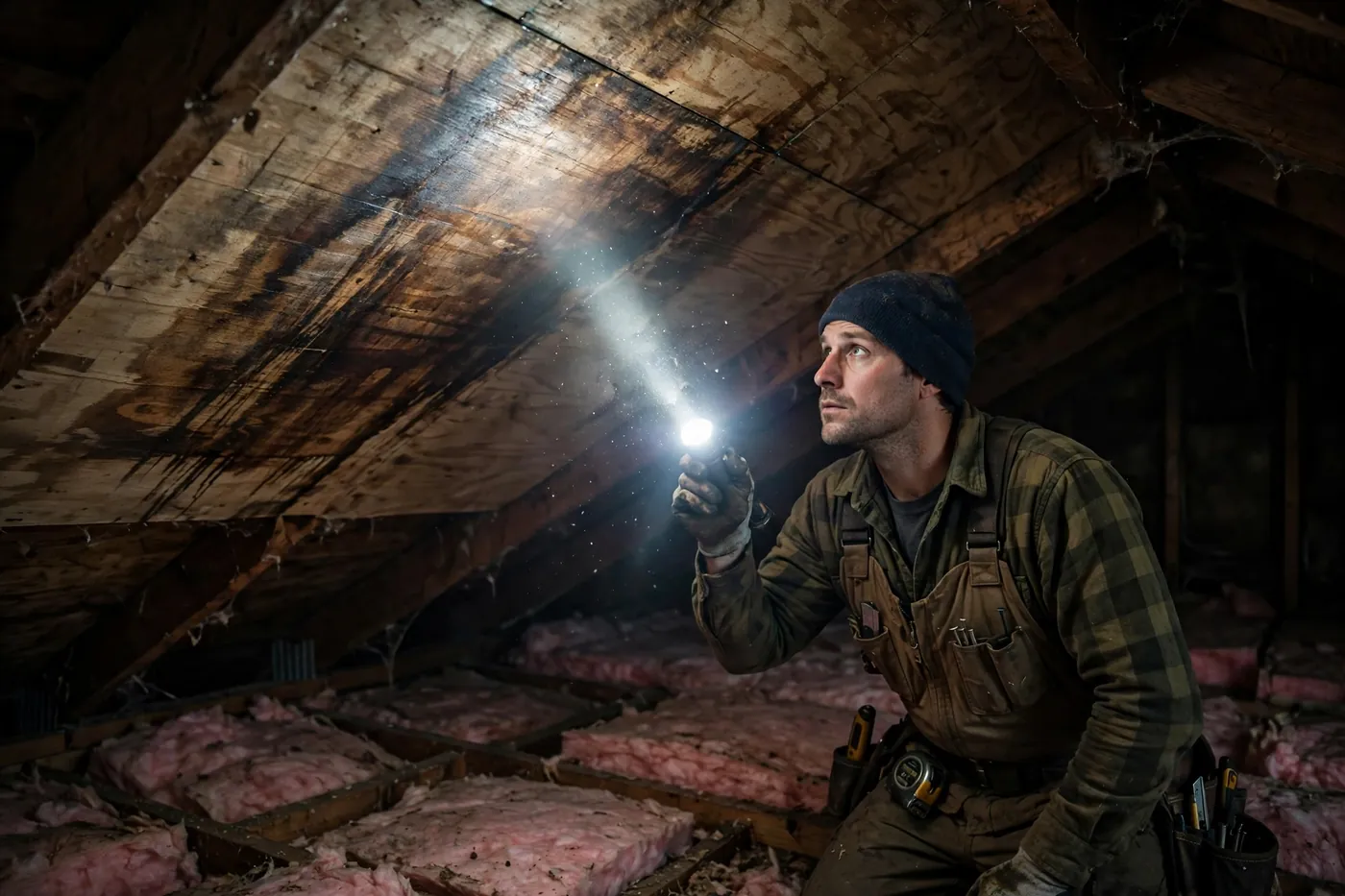
Rust is the slow failure. Leaves and debris sit in a valley, hold moisture against the metal, and over seasons the metal thins at the pinch point until a pinhole opens. From inside, the stain may appear well away from the valley itself, because water that enters at the pinch point runs along decking before it drops. A valley repair replaces the compromised metal and clears the debris path, and it checks the decking underneath, which may have softened after seasons of slow wetting.
Skylights: four sides, four chances to leak
Skylights bring daylight in, and they bring a flashing problem with them. A skylight sits in a hole cut through the roof, and its curb — the raised frame it sits on — needs flashing on all four sides, plus a head flashing at the top and a sill flashing at the bottom. Any one side can fail on its own: head flashing that lets wind-driven rain underneath, side flashing that has lost its seal, or a sill that ponds water instead of shedding it.
Skylight leaks are easy to misread, because condensation on the inside of a skylight can drip in the same place a flashing leak would. In Owensboro's humid Ohio River climate, a skylight in a bathroom or kitchen is especially prone to that confusion, since warm moist air rises straight to the glass. A repair visit should separate the two before cutting anything open: a flashing leak follows rain, condensation follows cold glass and warm indoor air. Fixing the wrong one leaves the drip exactly where it was.
Paperwork that matters when there is no state licence
Flashing work also touches the paperwork side of a roof job. In Kentucky there is no state roofer licence, so a licence number tells you very little on its own. What matters more is the written scope: which junctions are being repaired, what metal is being used, whether decking underneath is included, and how the work follows NRCA guidance for flashing details. A scope that names each junction — chimney, wall, skylight, valley — is checkable in a way that a single line saying the flashing will be fixed is not.
Larger scopes may also involve Owensboro Metropolitan Planning Commission permits, particularly when decking is replaced or structure is altered as part of the repair. That question belongs at the start of the job, in the written scope, so there are no surprises once shingles are lifted. And because water from a flashing failure often travels, the scope should also say which parts of the slope were checked and found sound, not only which junction is being repaired.