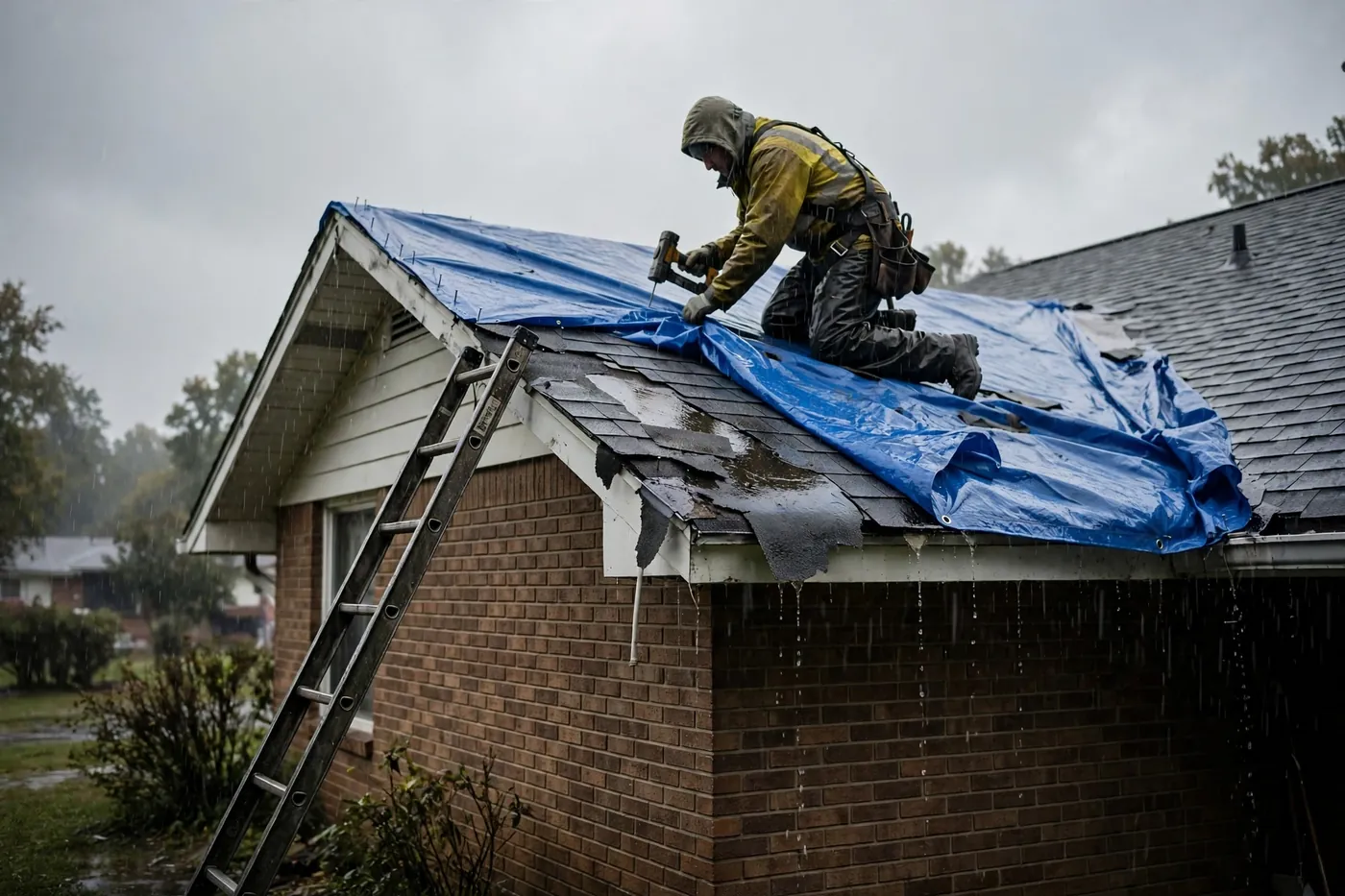
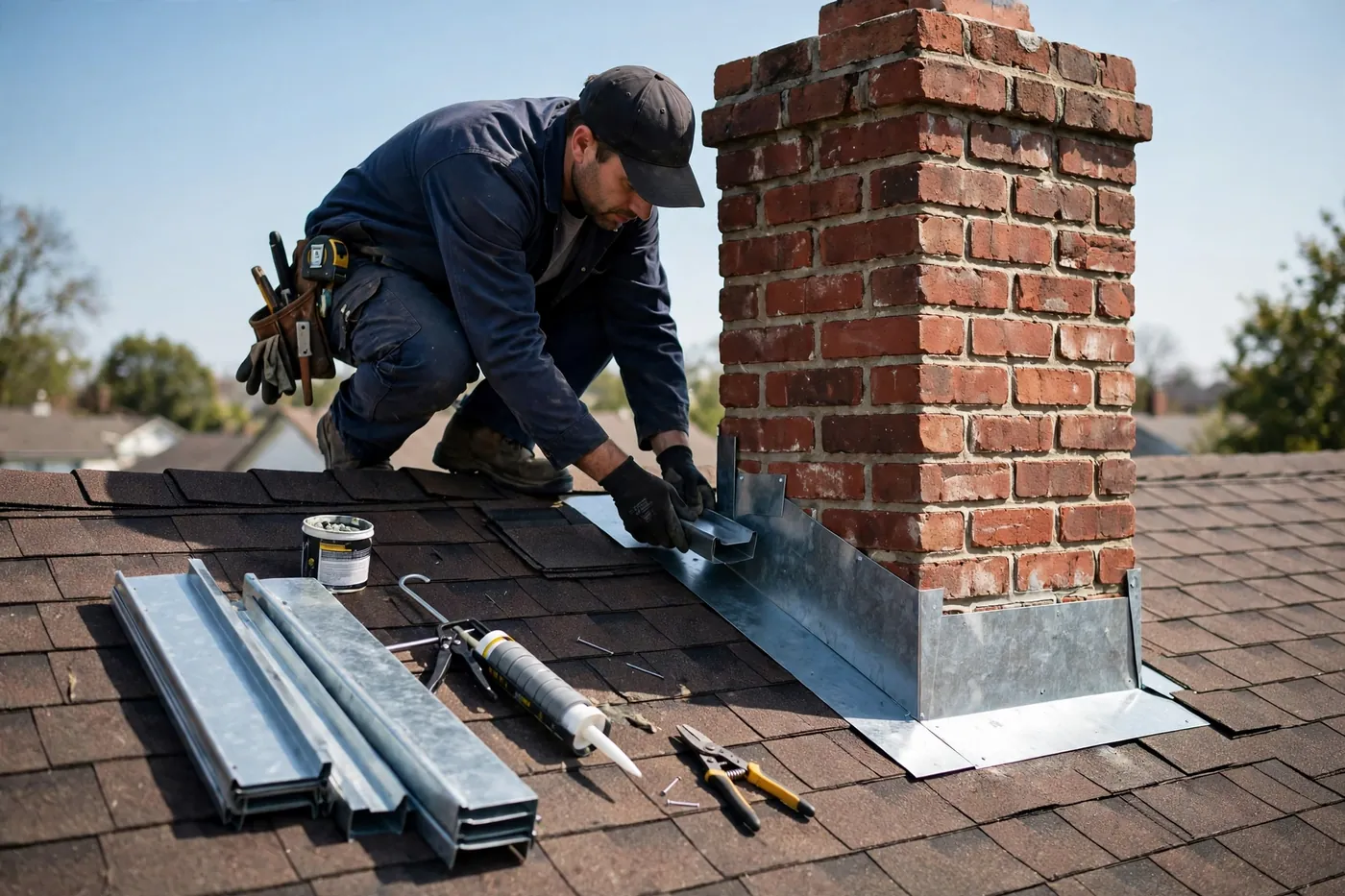
Roof leak repair in Hillcrest, Owensboro usually begins under the trees. This is a neighborhood of established homes on shaded, leafy streets, and that shade is both a blessing and a slow leak-maker. Leaves and small branches collect in valleys and behind chimneys, hold moisture against the roof, and give water a place to sit instead of a path off the roof. Over time, that standing dampness wears on shingles and flashing in exactly the spots that are hardest to see from the ground.
The homes here are old enough that their original flashing is often the weakest link. A roof can still have useful life left in its shingles while the metal at the valleys, walls, and vents has thinned, lifted, or lost its seal. If a stain has appeared, call now and say when it shows up and which rooms it touches. That timing is often the first clue to whether you are dealing with a valley, a vent, or something else entirely.
Tree Debris, Valleys, and Slow Damage
Hillcrest roofs carry more tree cover than most parts of Owensboro, and valleys take the worst of it. A valley is already where two roof planes send their water together, so a mat of leaves there acts like a small dam. Water backs up under the shingles on both sides, and during a hard rain it can push sideways into places that were never meant to stay wet. Clearing the valley helps, but if the shingles or the metal beneath have already softened, clearing alone will not close the opening.
Branches that brush the roof cause a quieter kind of wear. They scrape granules off shingles, lift edges in the wind, and drop twigs that wedge under flashing. A single overhanging limb can mark one slope of a roof while the rest of the house looks untouched, which is why a leak on one side of a Hillcrest home often traces back to the tree above that slope, not to a roof-wide failure.
- Leaf mats in valleys act like dams and push water sideways
- Debris behind chimneys holds moisture against flashing
- Overhanging limbs scrape granules and lift shingle edges
- Shaded slopes stay damp longer after every rain
Follow the Water Uphill From the Stain
Water rarely drops straight down. Once it gets under a shingle or a piece of flashing, it follows the slope of the decking and the line of a rafter until gravity and a gap let it through. In a Hillcrest home with a long roof plane, that can put the ceiling stain a good distance from the opening, and it can make a leak look like it moved between storms when really the water just found a different exit.
The check that matters happens in the attic. Stained decking, damp insulation, and a line of discoloration running uphill all point toward the source, and the roof above that line is where the repair belongs. Skipping that step and patching near the stain is how a home ends up with two or three repairs for a single opening.
- Water runs along rafters and decking before it drips
- Attic stains and damp insulation point uphill to the source
- One opening can produce stains that seem to move between storms
Winter Storms and the Condensation Question
December and January storms hit Hillcrest roofs with wind that drives rain under edges and into valleys already full of debris. A roof that survived calm summer rain can begin leaking in a winter storm for that reason alone, and the leak may not repeat until the next wind-driven rain. That on-and-off pattern is frustrating, but it is useful evidence, because it points to a wind-exposed joint rather than a wide failure.
Owensboro sits in the Green River region with Ohio River humidity in the air, and that humidity complicates the picture in winter. Warm air from the living space that leaks into a cold attic can condense on the underside of the decking and drip onto insulation, leaving marks that mimic a roof leak. Good attic ventilation and sealing at the ceiling line reduce that risk, and a careful check separates condensation marks from storm-driven leaks before any shingles are touched.
- Wind-driven winter rain enters joints that calm rain misses
- Debris-filled valleys leak worst when rain is heaviest
- Condensation drips on cold mornings, leaks follow storms
- Ventilation and ceiling air sealing cut condensation risk
First Steps After a Leak, and What Drives Repair Scope
Catch the drip, move anything valuable out from under it, and photograph the stain with some of the surrounding ceiling in the frame. If the attic is safe to enter, look for the damp line and note whether it runs toward a valley, a chimney, or a vent pipe. Do not climb onto a wet roof to chase the source yourself. Call now with the photos and the timing, and the repair can be aimed at the opening rather than at the stain.
Repair scope in Hillcrest depends on what the uphill check finds. A short run of valley metal and a few shingles is a different job from rotted decking under a long debris dam, and a steep, tree-shaded slope takes more care to work on than a low, open one. Whether the job touches structural work that falls under Owensboro Metropolitan Planning Commission permit rules also matters, as does matching materials to NRCA and ARMA guidance and to standards such as ASTM D7158 where they apply.
- Catch the drip, photograph the stain, and note the timing
- Trace the damp line in the attic toward a valley or vent
- Scope depends on decking damage, slope, and access
- Permit rules and material standards shape the final job