A roof leak during a storm feels urgent because it is. Water is already inside, and every hour it keeps coming adds to the damage in the ceiling, the insulation, and the wall cavities below. At the same time, the worst decisions during a leak are usually the rushed ones — climbing onto a wet roof, poking at a bulging ceiling, or trying to seal something from inside while the rain is still falling.
This guide separates what to do right now from what can wait until the rain stops and an inspection can happen. The immediate job is containment and safety. The repair comes after, and it starts with finding the source, not with patching the stain you can see.
Make the area safe, then protect what is under the drip
First, protect people and power. If water is dripping near a light fixture, a ceiling fan, or an outlet, turn off the circuit for that area at your breaker box and keep everyone away from the wet spot. Water and wiring are a bad combination, and a fixture that looks fine on the outside can still have water sitting inside it.
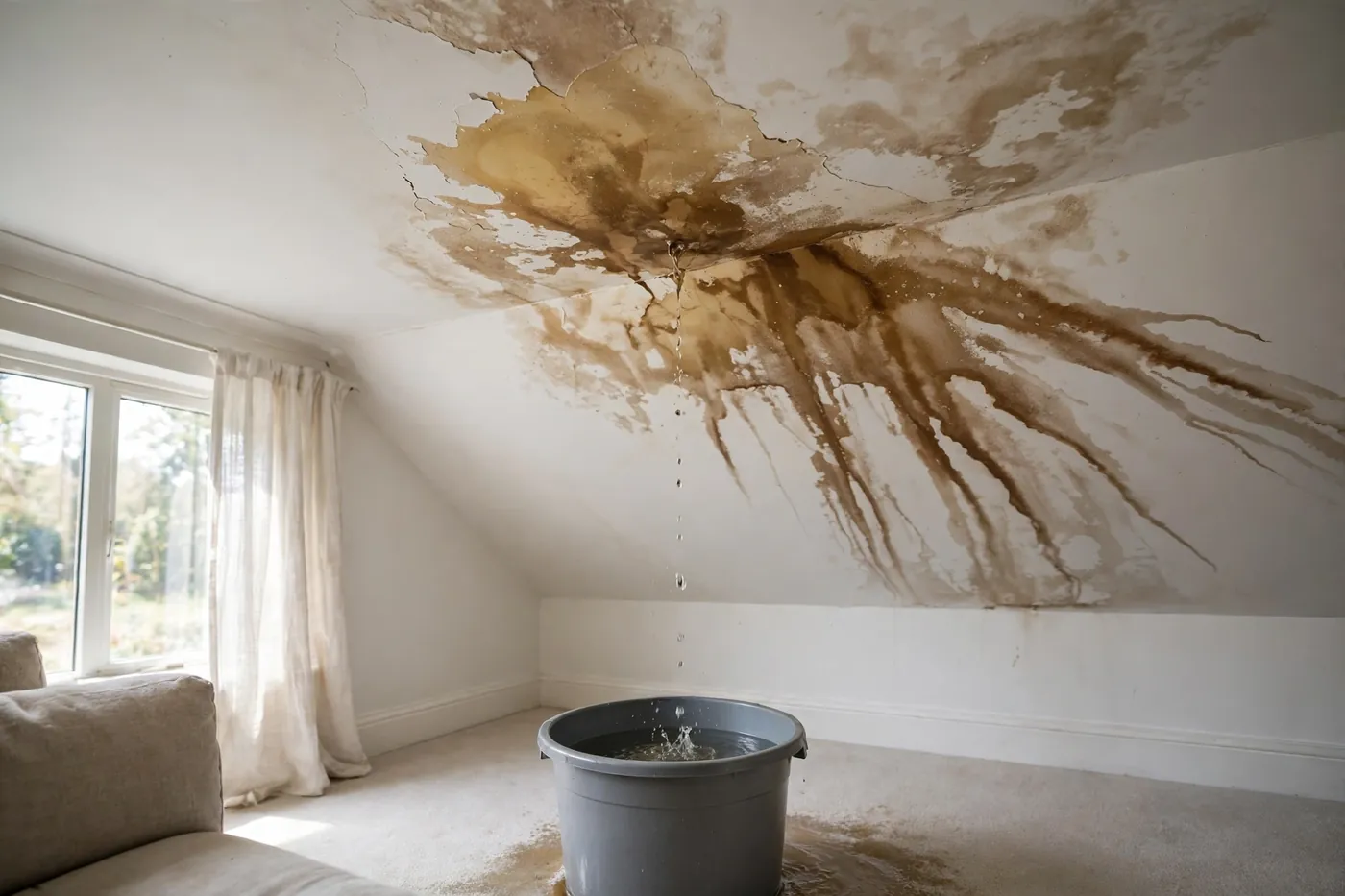
Next, move what matters. Furniture, electronics, rugs, and anything stored under the leak should shift out of the way. A bucket or a large pot under the drip catches what is coming through, and a towel on the floor around it stops splashes from spreading. If the drip is landing on a hardwood floor, a plastic sheet under the bucket saves the finish from a second kind of damage.
- Turn off power to any fixture or outlet near the water
- Move furniture, electronics, and rugs out of the way
- Bucket under the drip, towel or sheet around it
Do not poke a bulging ceiling
A ceiling that bulges is holding water. That sounds contained, and in a way it is, but a bulge can release all at once, and the water inside it has already soaked the drywall. Do not poke it, press it, or try to drain it yourself. The weight of trapped water can bring a section of ceiling down without warning.
If the bulge is growing, move everything out from under it and keep the room clear. A bucket on the floor underneath is still useful, in case it releases on its own, but do not stand under it to watch. This is one of those cases where doing less, and waiting for someone who can check the attic above it, is the safer choice.
A safe attic look, only if you can do it safely
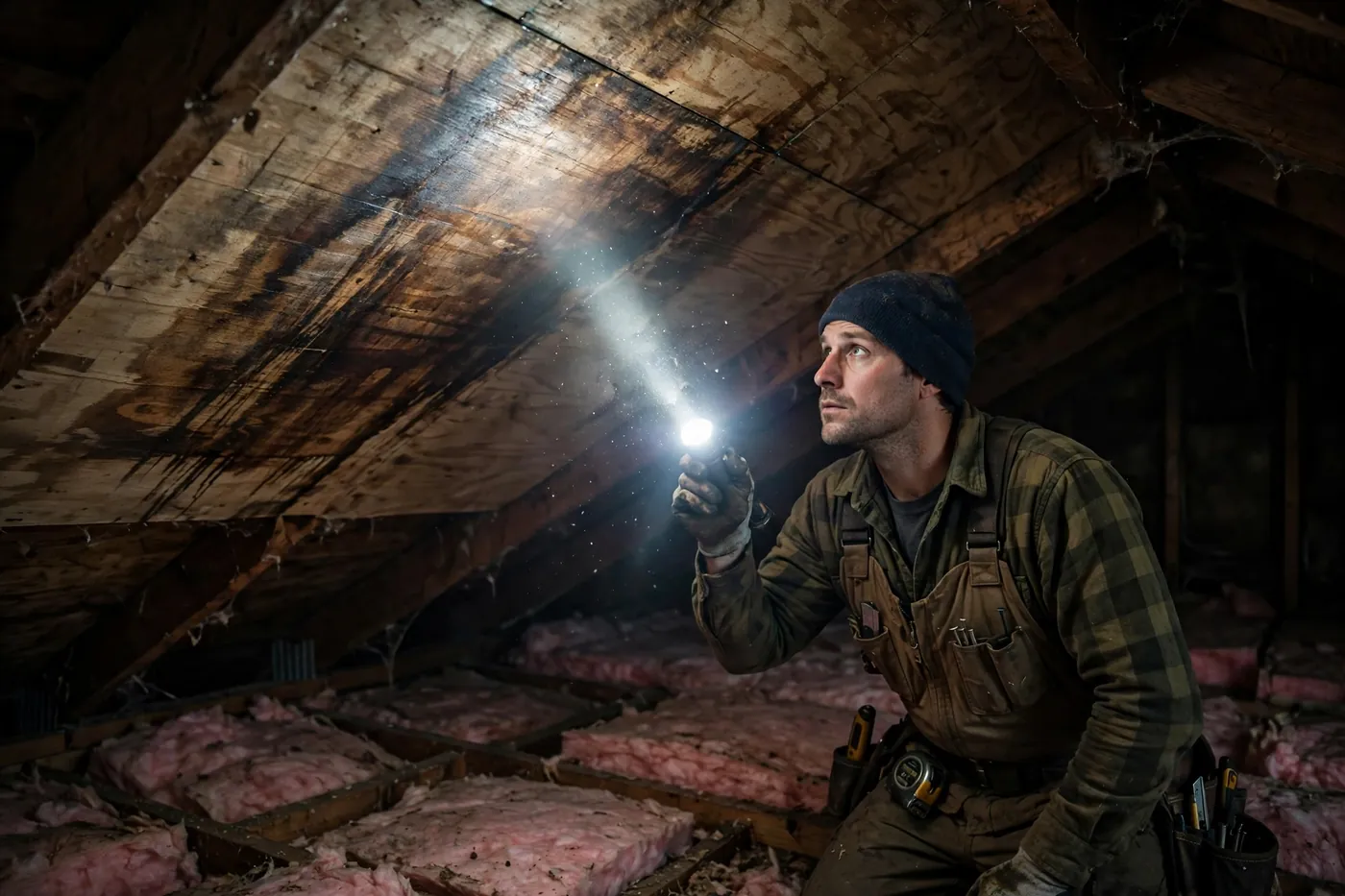
If you can reach your attic safely — a stable ladder, a dry floor to stand on, and enough light to see — a quick look helps, but only if it is safe. Do not walk on wet insulation or step between joists you cannot see clearly, and do not go up while the storm is at its worst. A flashlight check for the general area of dampness is enough; you do not need to find the exact entry point yourself.
What you are looking for is simple: where the water is coming through the decking, and whether it is pooling anywhere. A photo from the attic, taken from a safe spot, can help the inspection later. If the attic is cramped, dark, or the floor is not solid, skip it. No photo is worth a fall through a ceiling.
Stay off a wet roof
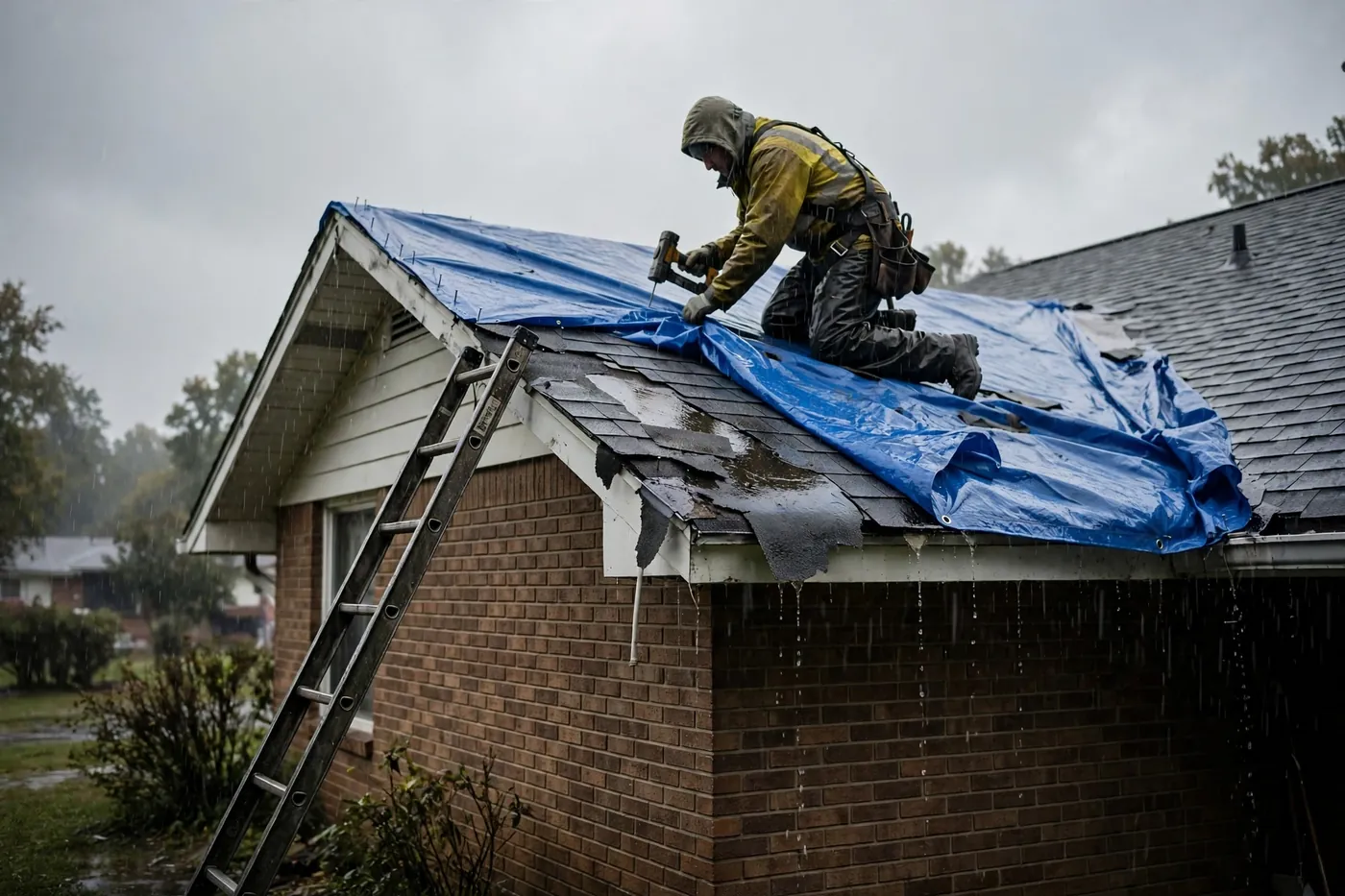
Stay off the roof while it is wet. A wet shingle surface is slick, and a roof that is already leaking may have soft decking under it that does not hold weight the way it should. Tarps and sealants applied in the rain also tend to fail, because they cannot bond to a wet surface, and a badly placed tarp can trap water and make the leak worse.
The one exception is a tarp placed from inside the attic, if that can be done safely and without climbing onto the roof — but even that is a stopgap, and it is not something to attempt in the middle of a storm. For most homeowners, the right move during rain is containment inside the house, and a call to set up an inspection once the weather allows a proper look.
Write down what you see, while it is happening
A few notes taken now save a lot of guessing later. Write down when the leak started, whether it only happens during wind-driven rain or during any rain, and where exactly it shows up inside. If you can, note which part of the roof sits above that spot — a valley, a chimney, a vent pipe, a wall joint.
Photos help too. Take a picture of the drip, the stain, and anything you saw in the attic. Date them if your phone does not do it automatically. When the inspection happens, those notes and photos make it much easier to trace the water back to its source, especially if the leak stops as soon as the rain stops and the roof looks dry by the time someone arrives.
- When the leak started and what the weather was doing
- Whether it happens in all rain or only wind-driven rain
- Where it shows up inside, and what sits above it on the roof
After the storm: get an attic-first inspection
Once the rain has stopped, the next step is an attic-first inspection. That means starting where the water traveled — the underside of the decking, the insulation, the path it took — and following it back to the entry point on the roof. The stain on your ceiling tells you water got in, but the attic tells you where.
Expect photos of what was found and a written scope of the repair before work begins. That matters because a leak repair should target the failed joint, shingle, or boot that let the water in. A repair aimed at the source, rather than at the stain, is what keeps the same leak from returning with the next Owensboro storm.