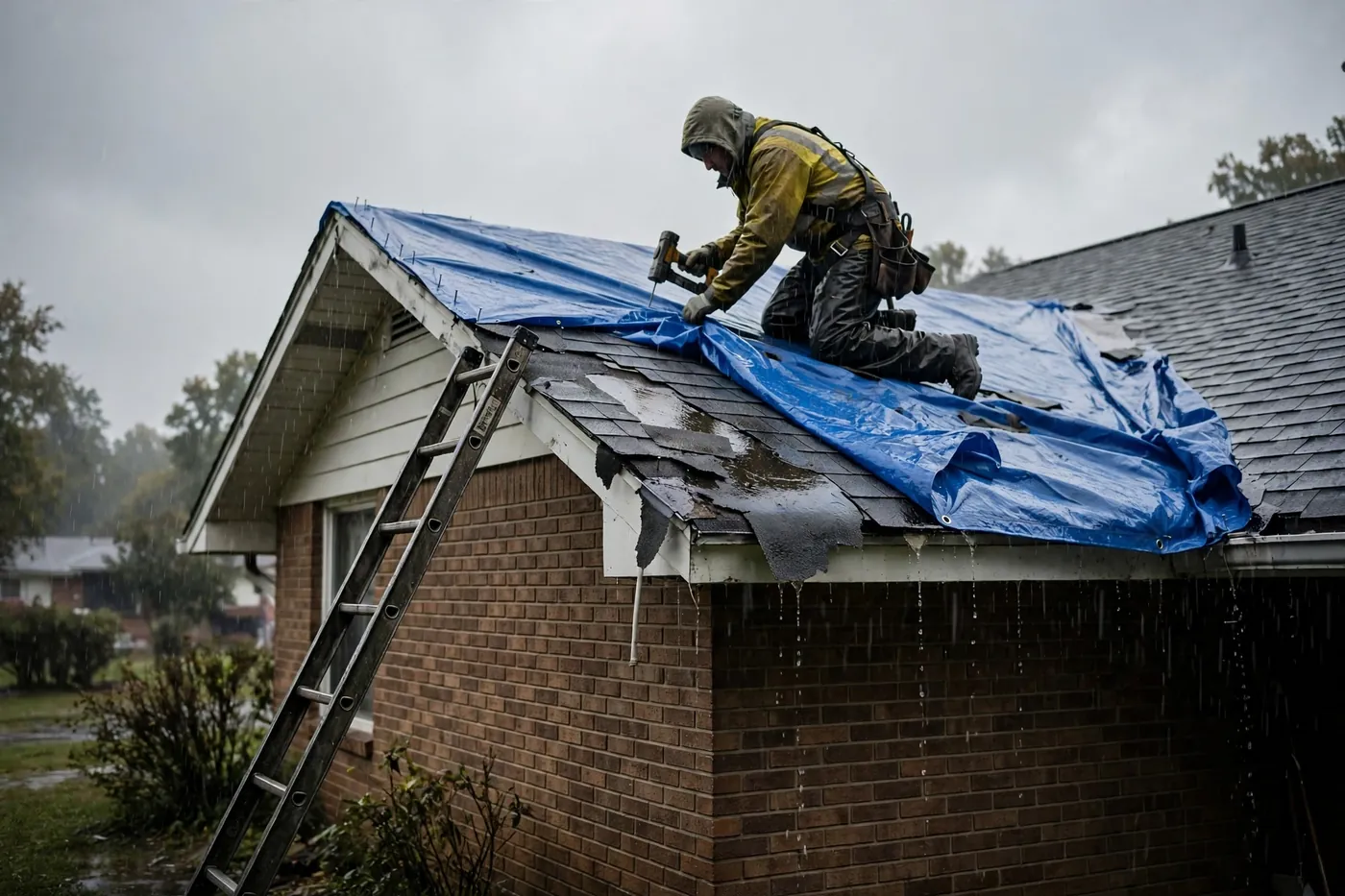
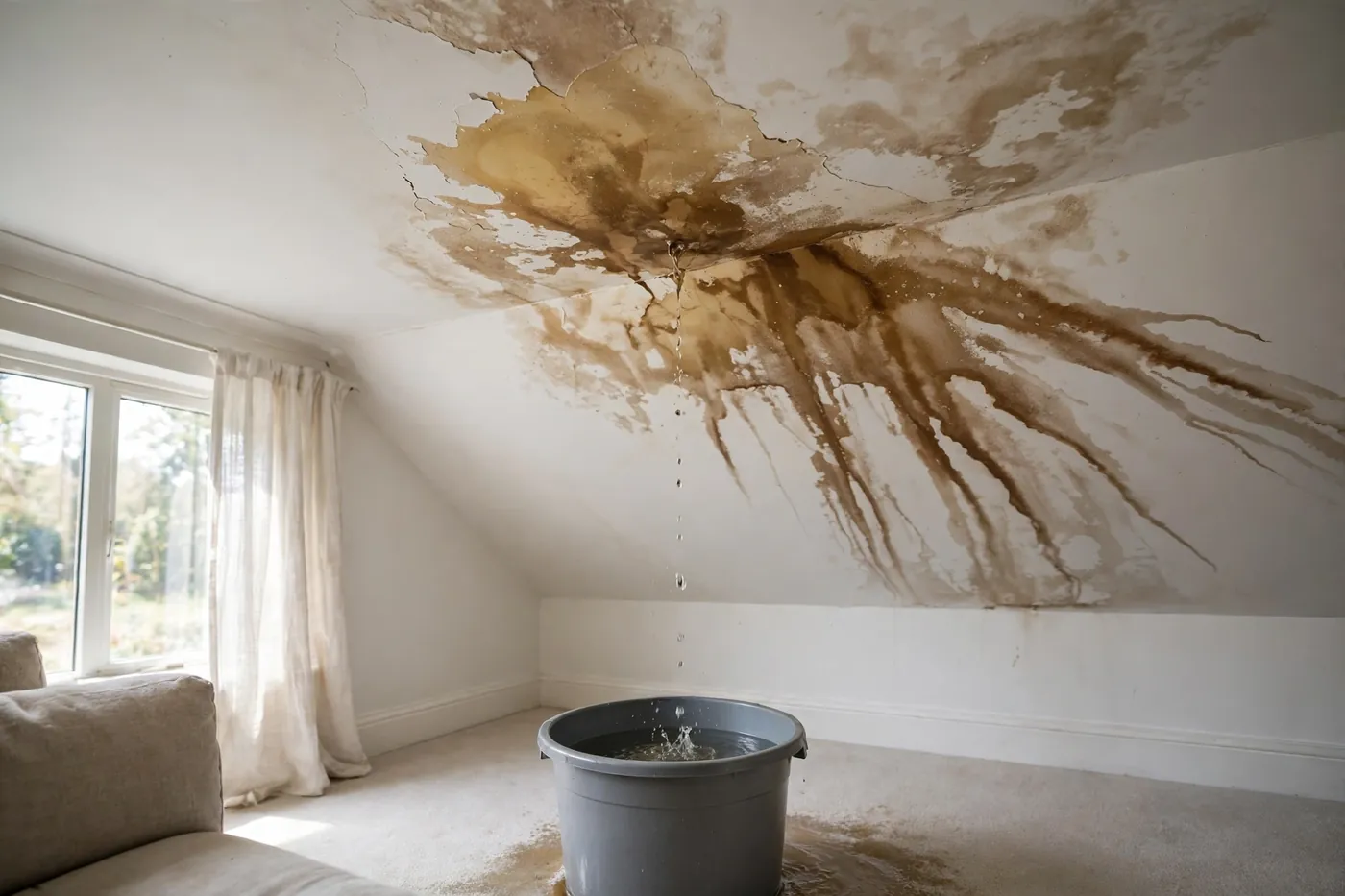
Asking what a roof leak repair will cost is a fair question, and the reason it has no single answer is that a leak is not one job. A cracked vent boot, a failed chimney flashing joint, and a valley that has been letting water in for months are three different repairs, even if all three first showed up as a stain in the same place on a ceiling.
This guide does not give figures, because a figure without an inspection would be a guess. Instead, it walks through the factors an inspection will weigh when it scopes a repair in Owensboro — the roof itself, where the leak sits, how far the water has traveled, and what the weather here does to each of those things.
Where the leak is, and what kind of joint it is
Where the leak sits on the roof changes the work involved. A leak at a single vent boot on an open, easily reached slope is a contained job. A leak at a chimney, a wall joint, or a valley is more involved, because those joints have multiple layers — flashing, counter-flashing, sealant, and the roofing material itself — and each layer has to be checked and, where needed, redone in the right order.
Valleys and chimneys also concentrate water. A valley collects runoff from two slopes, and a chimney creates a dam that water pools against during driving rain. Repairs in those spots often mean working with more material and more care around the joint, because a repair that seals one side of a joint but leaves the other open will leak again with the next storm.
The roofing material, and how old it is
Roofing materials change how a repair is done. Asphalt shingles, metal panels, and flat-roof membranes each have their own way of being opened, repaired, and sealed, and a repair that works on one will not necessarily work on another. Matching the existing material matters too, especially on a visible slope, where a mismatched patch stands out and can behave differently in heat and cold.
Age matters alongside material. An older roof may have brittle shingles that break when lifted, or sealant that has hardened across a whole joint rather than just at the leak. In that case, the repair may need to extend a little further than the leak itself, to reach sound material that will hold a seal. That is not upselling — it is the difference between a repair that holds and one that fails at the next seam.
How far the water traveled before it was found
How far water has traveled before it showed inside is a major factor, and it is the one homeowners least expect. A leak that was caught early may have damaged only a small area of decking and insulation. A leak that ran for months, kept damp by Ohio River humidity, may have soaked insulation across a wider area, stained decking, and softened drywall.
That hidden damage has to be dealt with, not just the opening on the roof. Wet insulation loses its ability to insulate and can hold moisture against wood. Decking that has softened may need to be replaced in that section before the roof above it can be sealed properly. An inspection that starts in the attic is how this gets found — and why two leaks with identical ceiling stains can need very different scopes.
- Insulation that has stayed damp and clumped
- Decking that feels soft or shows staining
- Drywall or trim that has swollen or softened
Access, slope, and working conditions
Access shapes the work more than most people realise. A steep slope, a roof that is hard to reach safely, or a leak tucked behind a chimney or under an overhang all slow the job and require more care. So does a leak on a commercial building with a flat roof, where the entry point may be far from where the water appears inside, and the inspection has to cover a much larger surface.
Weather plays into access too. Owensboro's heavy summer rain and cold winter snaps both limit when certain repairs can be done properly. Sealants and adhesives need suitable conditions to bond, and a repair rushed in bad weather may need to be redone. Timing the repair to suitable conditions is part of getting it right the first time.
Whether there is one leak, or several waiting to happen
Sometimes the inspection finds more than one entry point. A roof that has had several years of wear may have a cracked boot, a tired flashing joint, and a few lifted shingles all at once, and fixing only the one that is leaking today leaves the others to leak next season. A good written scope will list each problem separately, with photos, so you can see which parts are urgent and which are worth watching.
This is also where photos before work earn their keep. They let you compare what was found against what was repaired, and they give you a record for the next inspection. A repair scope that is specific — this joint, this boot, this section of decking — is easier to understand, easier to check, and easier to compare than a vague description of general roof work.
Reading a repair scope, and keeping the record
When you receive a scope, read it for specificity. It should name the entry point, describe the repair at that point, and note any hidden damage found in the attic. If it lists extra work, ask what each item is for and what happens if it is left alone. A clear answer to that question tells you a lot about whether the extra work is needed or optional.
And keep the scope and photos after the repair. They become part of your roof file, they help the next inspector understand what was done, and they make any future insurance conversation much easier. A leak repair is a small job in the life of a house, but a clear record of it is worth keeping.